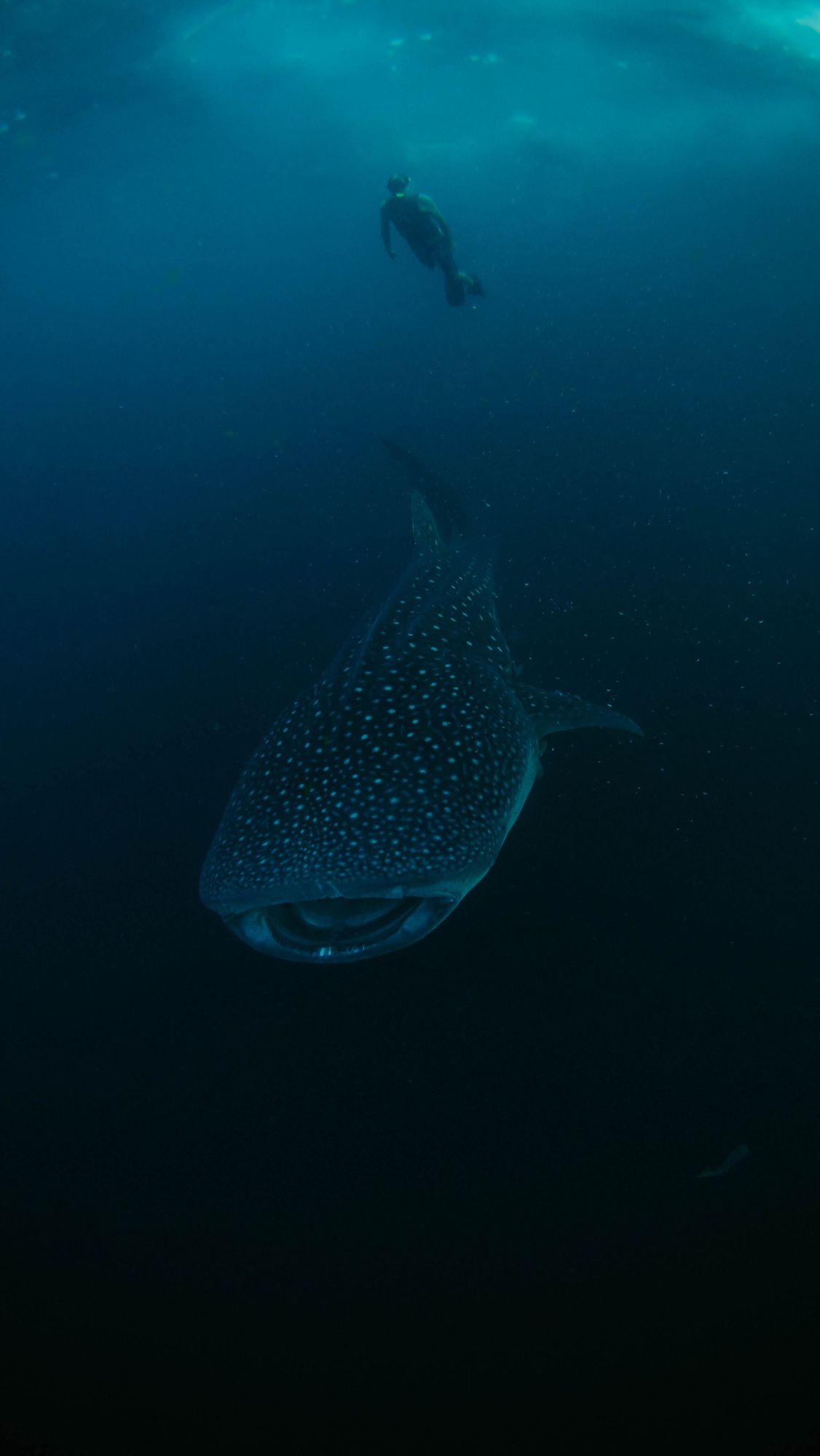
On the north coast of New Guinea, a vast bay curls into the island like a question mark. Teluk Cenderawasih is Indonesia's largest marine national park, a sea that was cut off from the Pacific long enough to grow its own species, and the place where whale sharks rise to feed beside the nets of floating fishing platforms.
What is Teluk Cenderawasih National Park?
Teluk Cenderawasih National Park (Taman Nasional Teluk Cenderawasih) protects the southwestern part of Cenderawasih Bay, the great bay on the north coast of New Guinea. At 1,453,500 hectares, about 14,535 km², it is Indonesia's largest marine national park, and roughly 90 per cent of it is open sea. It was declared a marine nature reserve in 1990 and formally became a national park by a Ministry of Forestry decree on 29 August 2002.
The park stretches across two regencies: Teluk Wondama in West Papua, on the western shore, and Nabire, now part of Central Papua, on the southern shore. It is run by the Balai Besar Taman Nasional Teluk Cenderawasih, with offices in Manokwari and Nabire. This is not empty wilderness: 58 coastal villages lie within the park, and their fishing grounds overlap its reefs.
Why is Cenderawasih Bay so special?
Cenderawasih Bay is often described as an ancient sea. Between about 14 and 3 million years ago, tectonic movement sealed much of its mouth, and a shallow sill still limits the exchange of water with the Pacific. Cut off for so long, the bay developed its own fauna, and it has been called the Galápagos of the East.
Surveys reported in the dive press recorded 995 fish species and more than 500 coral species in the bay, including fish found nowhere else, such as the Cenderawasih fairy wrasse. Its best-known endemic is the Cenderawasih epaulette shark (Hemiscyllium galei), a small walking shark described in 2008 and apparently confined to this bay. Burgess's butterflyfish, usually a deep-water fish at 60 to 80 metres, is common here at around 10 metres.
Above the reefs, the park shelters dugongs, dolphins and four species of sea turtle. On land, its islands hold mangroves, beach forest and dozens of bird species, several of them protected.
Where can you swim with whale sharks in Cenderawasih Bay?
The whale sharks gather at Kwatisore, in the south of the park near Nabire. They feed around bagan, floating lift-net platforms where fishermen lower their nets under lights at night to catch small baitfish such as anchovies. The sharks come to the nets, and visitors snorkel or dive beside them, usually within minutes of arriving at a platform.
This is one of the few places where whale sharks are present all year. A study from November 2023 to January 2024 identified 27 individuals at Kwatisore, all males and mostly young animals around 3.5 metres long, and found they appeared most often in the morning and followed the anchovy catch. Monitoring by the park authority and Pertamina International Shipping, which helps run a Whale Shark Center at Kwatisore, had counted 203 individuals in the bay by May 2024.
Tourism here is young. It began after a mission pilot swam with the sharks in 2000, and the authorities allowed organised interaction in 2010. Visitor numbers grew from 1,764 in 2012 to 4,083 in 2016, still tiny by the standards of other whale shark sites.
How do you swim with whale sharks responsibly?
Never touch or ride a whale shark, keep at least 2 metres from the fins and 3 metres from the tail, and never use a camera flash. These rules come from the code of conduct written by the park authority and WWF-Indonesia, and your guide will brief you on the current version before you enter the water.
When a shark swims towards you, move to the side or back away rather than blocking its path. Boats should cut their engines when they tie up at a platform. Liveaboard guidance for Kwatisore also asks that no fishing lines are in the water during an encounter and that fishers do not stand on the sharks.
The feeding itself is debated. The sharks take fish from the nets and from the fishermen, which keeps them close but risks entanglement and dependence. Keep your time in the water calm and short, pay the village and platform fees, which compensate fishers for the baitfish, and leave no rubbish on the water.
What else is there to see in Teluk Cenderawasih?
Beyond Kwatisore, most of the park is seen from a liveaboard or on longer trips from Wasior or Nabire. The park lists 18 islands, many of them small and fringed with white sand and reef.
On the western side, Roon is known for birdlife, diving and boulders covered in sun corals, and for an old church said to keep a Bible printed in 1898. Mioswaar has hot springs, a waterfall and a cave holding ancestral remains, and Rumberpon offers mangroves, birdwatching and long beaches, with a Japanese aircraft wreck reported on the seabed nearby. Yoop and the Wondesi waters are known for dolphins, and Nusrowi has calm water suited to beginner divers.
Divers who have explored the bay describe reefs such as Tridacna Atoll, with plate and hard coral meadows, and Dr. Seuss Reef, a submerged ridge covered in soft corals and whip corals. Many liveaboards add Second World War wrecks around Manokwari, outside the park, such as the Shinwa Maru off Mansinam Island.
Who lives around Cenderawasih Bay?
The bay is home to several Papuan peoples. Around Wondama Bay on the western shore live the Wandamen, Wamesa, Roswar and Roon peoples, and around Nabire the Yaur and Umari.
Villages here are small and remote. Akudiomi, a customary village near the whale shark area, had about 1,300 people in 2013 and, as late as 2018, no mobile signal. Visit with a guide from the area, ask before taking photographs, dress modestly, and respect customary rules about reefs, sacred sites and fishing grounds.
When is the best time to visit Teluk Cenderawasih?
Whale sharks are seen at Kwatisore all year, so there is no closed season for the main attraction. Most liveaboards visit between about June and October, and especially July to September, when trade winds make many other Indonesian dive areas rough but the bay stays relatively sheltered.
Water stays warm, around 27 to 30 °C. Rain can fall in any month, so plan for showers and for days when boats wait for the weather. At the platforms, sharks are seen most often in the morning, so expect early starts.
How do you get to Teluk Cenderawasih National Park?
For the whale sharks, fly to Nabire's Douw Aturure Airport (NBX), opened in November 2023 about 12 km from town. Recent schedules list Batik Air and Sriwijaya Air connections from Makassar, with onward links to Jakarta, and Wings Air and Sriwijaya Air flights from Jayapura. Routes in Papua change often and delays are common, so check schedules close to departure and allow spare days.
From Nabire, Kwatisore is reached by boat, roughly 1.5 hours by speedboat in good weather, or by a combination of road and boat. Operators with park permits arrange the trip. For the western bay, fly to Manokwari, the main liveaboard base, or to Wasior; Biak is another common departure point for liveaboards.
What permits and fees do you need to visit Teluk Cenderawasih?
Every visitor needs a SIMAKSI, the park entry permit, issued by the park authority in Manokwari or Nabire, and foreigners may also need a police travel letter (surat jalan). Licensed operators and liveaboards usually arrange both, and boats carry a park ranger. Fees are not published in a reliable online form, so confirm what applies with your operator and the park office before you go.
On top of park fees, Kwatisore village has charged a mandatory whale shark fee, listed at Rp 300,000 per person in liveaboard guidance, and boats pay the bagan owners for each visit, reportedly Rp 1 to 2 million. Treat these figures as a guide, not a quote. Carry enough cash in small notes for the whole trip.
Is it safe to visit Teluk Cenderawasih?
The region is not risk-free. The United States advises against all travel to Central Papua, which includes Nabire, and other governments urge caution across the Papua provinces. Read your own government's advice, check that your insurance covers the area, and travel with an established operator.
Armed conflict between security forces and separatist groups continues in parts of Central Papua, mostly in the highlands but occasionally in Nabire Regency itself, including a clash at an armed group's camp in the Kali Nabarua area in March 2026. Avoid the interior, follow local advice, and be ready to change plans. At sea, use boats with life jackets and a radio, and do not cross open water in bad weather.
