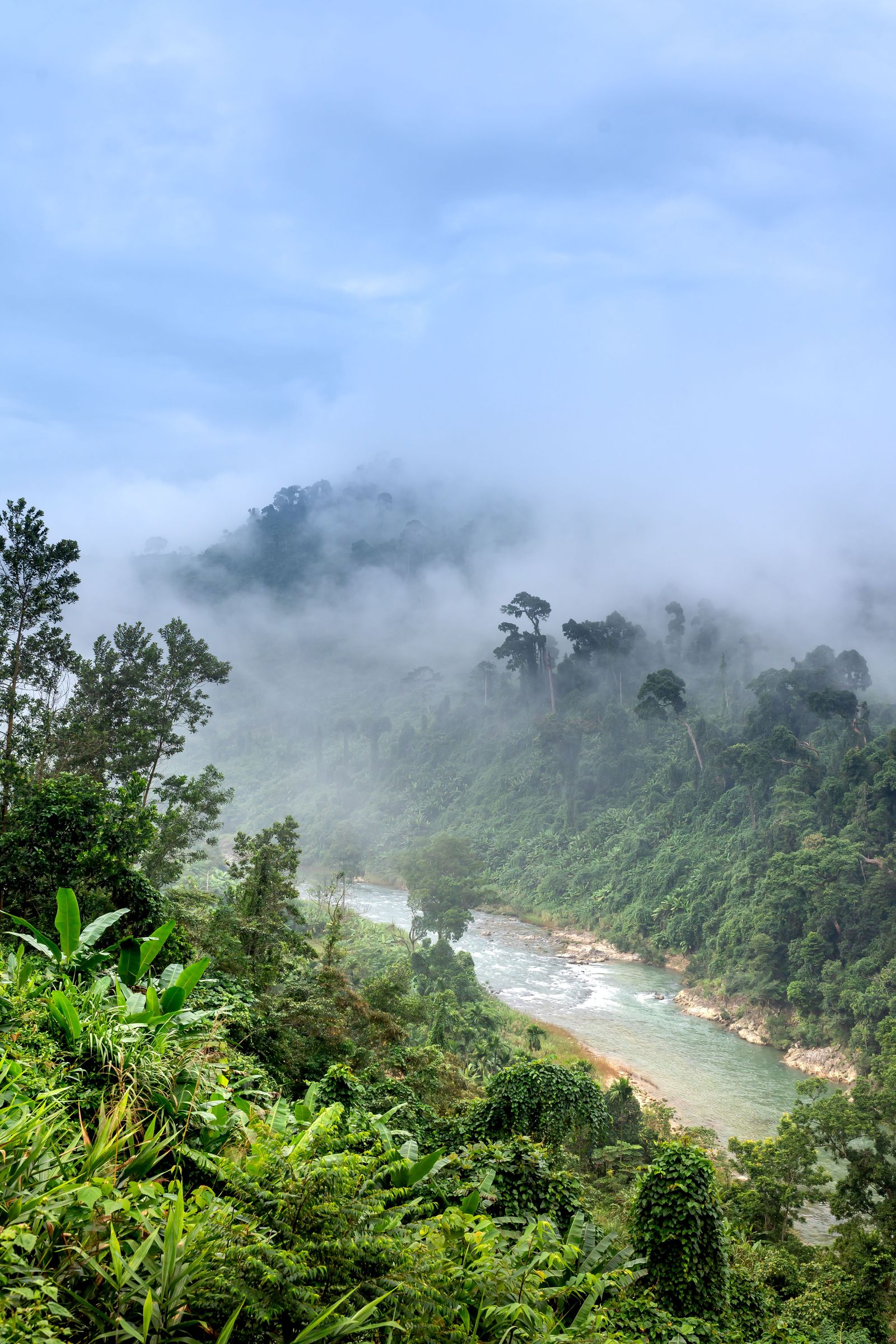
Across the mountains of northern Sumatra, Gunung Leuser protects one of the last places on Earth where orangutans, tigers, elephants and rhinos still share the same forest. Most travellers meet it at the riverside village of Bukit Lawang, but the park runs far deeper than a day trek, and it needs its visitors to behave well.
What is Gunung Leuser National Park?
Gunung Leuser National Park (Taman Nasional Gunung Leuser) is a large rainforest park straddling the border of Aceh and North Sumatra provinces on the island of Sumatra. It was established in 1980, covers about 830,000 hectares under its 2014 boundary decrees, and is named after Gunung Leuser, one of the high peaks of the Bukit Barisan range. It is famous above all as the home of the Sumatran orangutan.
The park runs from lowland forest close to sea level up to mossy mountain forest; its highest summit, Gunung Tanpa Nama, reaches about 3,466 metres. In 1984 it became an ASEAN Heritage Park, and in 2004 UNESCO inscribed it, together with Kerinci Seblat and Bukit Barisan Selatan national parks, as the Tropical Rainforest Heritage of Sumatra, a World Heritage site of about 2.5 million hectares.
The park is the core of the wider Leuser Ecosystem, a larger landscape of protected and production forest across Aceh and North Sumatra. It spans seven regencies, from Gayo Lues and Aceh Tenggara in the Acehnese highlands to Langkat and Karo in North Sumatra.
Why is Gunung Leuser so important?
Gunung Leuser is one of the very few forests where Sumatran orangutans, tigers, elephants and rhinoceros still live side by side. A 2026 study co-authored by Indonesia's Ministry of Forestry estimated 11,694 Sumatran orangutans in the wild, about 94 percent of them in the Leuser Ecosystem, after a fall of nearly 20 percent between 2011 and 2023.
The Sumatra World Heritage site as a whole holds around 10,000 plant species, about 200 mammal species and around 580 bird species. Inside Leuser you can find giant flowers such as Rafflesia arnoldii and Amorphophallus titanum, siamangs whose calls carry across the valleys, Thomas's leaf monkeys and hornbills. Sumatran rhinos are now extremely rare and almost never seen.
The forest is under heavy pressure. UNESCO placed the Sumatra site on its List of World Heritage in Danger in 2011, citing poaching, illegal logging, agricultural encroachment and plans for roads through the forest. In October 2025 the IUCN World Heritage Outlook rated the site's conservation outlook as critical.
Where should you go in Gunung Leuser?
Most visitors use one of three gateways: Bukit Lawang for orangutan treks, Tangkahan for a quieter river and elephant experience, and Ketambe for deeper, wilder forest in Aceh. Each is a separate trip, reached by its own road.
Bukit Lawang is a riverside village on the Bahorok River in Langkat Regency, about 90 km from Medan. Guesthouses line the river, and treks run from half a day to several nights in jungle camps, often ending with a ride back to the village on inflated tubes down the river. Nearby there is a bat cave and small waterfalls.
Tangkahan, also in Langkat, sits on the Batang Serangan River just outside the park boundary. Its community tourism group grew out of a decision by local people to move from illegal logging to ecotourism, and many of its forest patrollers are former loggers. The national park's elephant unit keeps a small herd here, brought from Aceh during the conflict years to help patrol the forest, and visitors can join the morning river bath. Watching and bathing is a gentler choice than riding. Ketambe lies in Aceh Tenggara on the road from Kutacane to Blangkejeren, beside a research station founded by Dutch biologist Herman Rijksen in 1971 to study wild orangutans. Climbing Gunung Leuser itself is a long expedition for experienced trekkers with a specialist operator.
Can you still see orangutans at Bukit Lawang?
Yes. Most guided treks from Bukit Lawang see orangutans, many of them semi-wild animals descended from the old rehabilitation programme, as well as fully wild ones. Sightings are never guaranteed, because the animals move freely through the forest.
The Bohorok orangutan centre opened here in 1973 to return orphaned and ex-captive orangutans to the forest. A 1995 forestry ministry directive stopped further releases at the site, which ended in 2001, and the last feeding platforms, where rangers once gave fruit to returning orangutans in front of crowds, closed in 2016.
The legacy is mixed. Some orangutans learned to expect food from people, and Mongabay reported in 2016 that some guides were still handing over fruit and snacks to guarantee photos, which keeps the animals dependent and spreads disease. Today the message from the park authority is clear: keep your distance and let the orangutans behave naturally.
What happened in the 2003 Bukit Lawang flood?
On the night of 2 November 2003 a flash flood on the Bahorok River swept through Bukit Lawang, destroying much of the village and killing more than 200 people, among them several foreign visitors. Officials and conservationists at the time linked it to years of illegal logging upstream in Langkat.
The village was rebuilt, and tourism has been its main income ever since; around 300 guides work there in peak season. The story still shapes local attitudes to the forest. In late November 2025 Cyclone Senyar brought deadly floods and landslides across Aceh and North Sumatra, including Langkat, and many people again blamed forest loss upstream.
Aceh, which covers most of the park, applies Islamic law, and the North Sumatran side is also conservative. Dress modestly in villages and towns, covering shoulders and knees, and keep swimwear for the river.
When is the best time to visit Gunung Leuser?
Gunung Leuser can be visited all year, but the drier spells around February to March and June to July usually give the easiest trekking. June to September is peak season at Bukit Lawang, with at least 200 visitors a day, so book a guide ahead if you travel then.
This is rainforest, so expect rain in any month and muddy, slippery trails after storms. Some guides find orangutan sightings most reliable when trees are fruiting, which often falls around December and January. After heavy rain, river levels rise quickly and tubing or river crossings may be cancelled.
How do you get to Gunung Leuser?
The usual gateway is Kualanamu International Airport (KNO) near Medan, North Sumatra's capital, which has domestic and regional flights. From there Bukit Lawang is about three to four hours by road, Tangkahan about three hours, and Ketambe a long day of around seven hours to Kutacane by minibus or shared taxi, then a short ride on.
Most travellers book a private car or a guesthouse transfer to Bukit Lawang; public buses run via Binjai and are cheaper but slower. Road conditions in Langkat and Aceh Tenggara can change after floods, so check with your guesthouse before setting off.
What does it cost to visit Gunung Leuser National Park?
Foreign visitors pay a daily park entrance fee, reported at around IDR 150,000 per person per day in 2023 and 2024, with a much lower rate for Indonesians. At Bukit Lawang the fee is normally included in the price of a guided trek, so ask your guide whether it is, and ask for an official ticket. Check the current rate before you go.
Guided treks are the main cost, priced per day and depending on group size and nights in the forest. Prices are similar across licensed operators in Bukit Lawang, so choose on ethics and group size rather than small savings. Budget extra for transport from Medan, river tubing and tips for guides and porters.
Is it safe to trek in Gunung Leuser, and what are the rules?
Trekking in Gunung Leuser is safe with a licensed guide, which is required to enter the park. The main risks are heat, steep muddy trails, leeches, rising rivers and the occasional pushy semi-wild orangutan, so wear proper shoes and follow your guide.
The core orangutan rules are simple: stay at least 10 metres away, never feed or touch them, keep your voice down and limit your time at each sighting. Do not trek if you have a cold or other illness, as orangutans catch human diseases. If an orangutan approaches, step back calmly and let the guide handle it.
How to visit Gunung Leuser responsibly
Choose a guide or operator who refuses to feed orangutans and keeps groups small, and say clearly at the start that you do not want food used to attract animals. Carry all your rubbish out, including from jungle camps, and do not buy wildlife products. Staying in locally owned guesthouses and paying the official park fee puts money where it protects the forest.
