
On the flat east coast of Lampung, a few hours from the Sunda Strait, lies one of the oldest reserves in Indonesia. Way Kambas is where the country trains elephants, breeds the critically endangered Sumatran rhino and tries, often painfully, to keep wild herds and farming villages apart. It is not a showpiece safari park: it is a working conservation landscape, and in 2026 it is changing fast.
What is Way Kambas National Park?
Way Kambas National Park (Taman Nasional Way Kambas, often shortened to TNWK) is a lowland park of about 125,600 hectares in East and Central Lampung, at the southeastern tip of Sumatra. Protection began under the Dutch Resident of Lampung in 1936, a colonial decree followed in 1937, and the area became a national park on 1 April 1989. It was declared an ASEAN Heritage Park in 2015, with the certificate handed over at the park in 2016.
The land is almost flat, from sea level to about 50 metres, and the forest is a mosaic: freshwater and peat swamp, lowland rainforest, riverine forest, mangroves along the Java Sea coast and open grassland. Much of the lowland forest is secondary growth, because the area was heavily logged in the 1960s and 1970s. The park is run by the Ministry of Forestry through the Way Kambas National Park office (Balai TNWK).
Why does Way Kambas matter for Sumatran wildlife?
Way Kambas is one of very few places that still shelter three of Sumatra's most threatened large mammals: the Sumatran elephant, the Sumatran rhino and the Sumatran tiger. The ASEAN Centre for Biodiversity lists about 50 mammal species and 406 bird species here, including six primates, tapirs and sun bears.
The park is best known for the Sumatran Rhino Sanctuary (SRS), a semi-wild breeding facility inside the forest run by the Ministry of Forestry with the Indonesian Rhino Foundation (YABI) and partners. In October 2026 it held 10 rhinos, and two females, Ratu and her daughter Delilah, were confirmed pregnant. Ratu's first calf in 2012 was the first Sumatran rhino born in an Asian breeding facility in 124 years. With fewer than 80 thought to survive in the wild, every birth counts. The sanctuary is not open to tourists.
Birders come for the forest and swamp species, among them the endangered white-winged wood duck, for which Way Kambas is one of the last strongholds.
Why do elephants and villagers clash around Way Kambas?
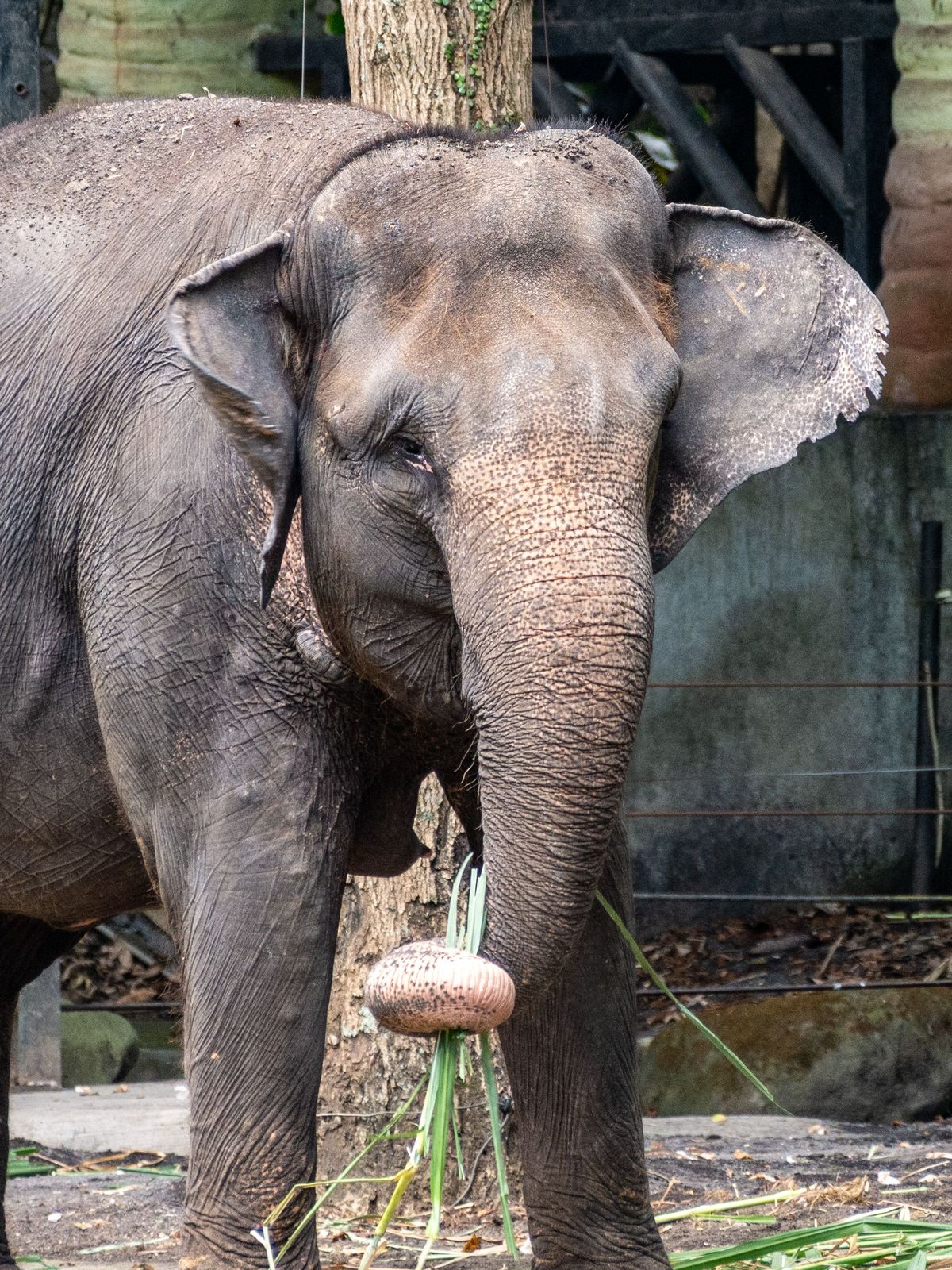
Way Kambas is an island of forest surrounded by farms and villages, and wild elephants regularly leave the park to raid crops. The conflict has lasted decades. In late December 2025 the village head of Braja Asri was killed by a wild elephant, and in January 2026 thousands of buffer-zone residents protested in East Lampung.
The park counts at least 213 wild elephants and around 60 captive ones, according to figures reported in 2025. Since 2011, Elephant Response Units (ERU) have used trained elephants and their mahouts, many recruited from buffer-zone villages, to patrol the boundary and push wild herds back into the forest. By 2022 the ERU worked from four camps, including Tegal Yoso, with 27 elephants, and its team reported a 60 percent fall in conflict incidents since 2011.
The government is now spending on a permanent fix. In February 2026 officials announced a plan of about Rp 2 trillion (around US$120 million) to revitalise Way Kambas, and in March the Forestry Minister said studies had cut the fence and embankment budget to about Rp 839 billion. Barrier prototypes are being tested, and a revitalisation of the park's elephant hospital is also planned.
Is Way Kambas open to visitors in 2026?
Yes, but only in a limited form. The park closed to tourism on 16 January 2026 so staff could focus on the elephant conflict, and reopened on 30 May 2026 for special-interest tours with a daily quota. When the day's quota is full, bookings close until the next slots open.
The Elephant Conservation Centre, known locally as the Pusat Latihan Gajah (PLG), was still under revitalisation when the park reopened and was not open to visitors. Forest fires also hit the park in 2026, including a blaze that began on 21 August, so conditions can change at short notice. Check the park office's official channels before you travel.
Can you still ride elephants at Way Kambas?
No. Elephant rides at Way Kambas ended when the park reopened after the pandemic in December 2023, and in December 2025 the Ministry of Forestry's conservation directorate ordered every conservation institution in Indonesia to stop elephant riding. Older blog posts that still list ride prices are out of date.
Captive elephants are still used for forest patrols, conflict mitigation and routine care by mahouts, which is the work you may see from a distance. After the 2023 reopening the park offered elephant washing and feeding packages instead of rides; with the elephant centre closed for revitalisation in 2026, ask what is available before you go.
What can you do in Way Kambas?
The 2026 programme centres on four guided activities: jungle tracking on forest trails, animal watching, a river trip by boat, and the Safari Night, a guided tour after dark. All are about seeing animals in their habitat, not performances.
On a forest walk you are more likely to hear gibbons and siamangs than see big mammals, but birds, primates and deer are regular, and fresh elephant signs are common. The river trip looks for birds, monkeys and reptiles along the banks. The night safari, first offered in January 2024, uses vehicles with a guide and runs about two hours, with chances of deer, mouse deer, civets and, with luck, tapirs.
The park names Way Kanan and Kuala Kambas, near the river mouth on the coast, among its sites for ecotourism and research. Tigers and rhinos are very rarely seen in the wild here, so come for the forest as a whole rather than a single species.
When is the best time to visit Way Kambas?
Way Kambas is a year-round park, and in 2026 the bigger question is whether tours are running and have space, not the season. The park averages about 3,000 mm of rain a year, with temperatures from about 16 to 32 °C.
Drier spells make forest tracks easier and boat trips more comfortable, while heavy rain can flood swampy ground and cancel activities. The dry season also brings fire risk to the grassland and peat, as the 2026 fires showed. Go out early in the morning or late in the afternoon, when animals are most active and the heat is lower.
How do you get to Way Kambas?
Fly or drive to Bandar Lampung, then continue about 90 km by road to the park, roughly 2 to 2.5 hours. The park entrance is in Braja Harjosari village in East Lampung. Radin Inten II Airport serves Bandar Lampung with flights from Jakarta and other cities; check schedules before you book.
Overland from Jakarta, take the ferry from Merak in Banten across the Sunda Strait to Bakauheni, then the Trans-Sumatra toll road north. From Bakauheni the park is about 120 to 130 km. Allow a long day of around 12 to 13 hours door to door, depending on traffic and the crossing.
Travel companies run shuttles from Bakauheni and Bandar Lampung toward East Lampung, but check how close to the park they go; many visitors simply hire a car and driver. Private vehicles have to stop at the rest area near the gate, and visitors continue on park transport.
What does it cost to visit Way Kambas National Park?
Prices for the 2026 quota tours had not been widely published when the park reopened, so confirm them when you book. As a guide, in 2023 the entrance ticket was Rp 100,000 for foreign visitors on weekdays and Rp 150,000 on holidays, and Rp 5,000 to Rp 7,500 for Indonesians. Activities cost extra: the night safari was around Rp 500,000 per person in 2025.
Bring cash. East Lampung is rural, card payments are not reliable, and you may need to pay your driver, guide and park transport separately. Bandar Lampung has the widest choice of hotels; ask the park about lodging closer to the gate when you book.
Is Way Kambas safe, and how do you visit responsibly?
Way Kambas is safe for visitors on guided tours, which is the only way tourism runs in 2026. The real risks are wild elephants, heat, insects and smoke during fire season, so follow your guide, keep your distance from any elephant, and never walk off a trail alone.
Visit responsibly by booking through the park and local guides, so your money supports both conservation and the buffer-zone villages that live with the elephants. Do not pay for any elephant ride or show, wherever it is offered. Stay quiet in the forest, never feed wildlife, take all rubbish out, and never light fires. Remember that the farmers outside the boundary carry the heaviest cost of the park's success.
