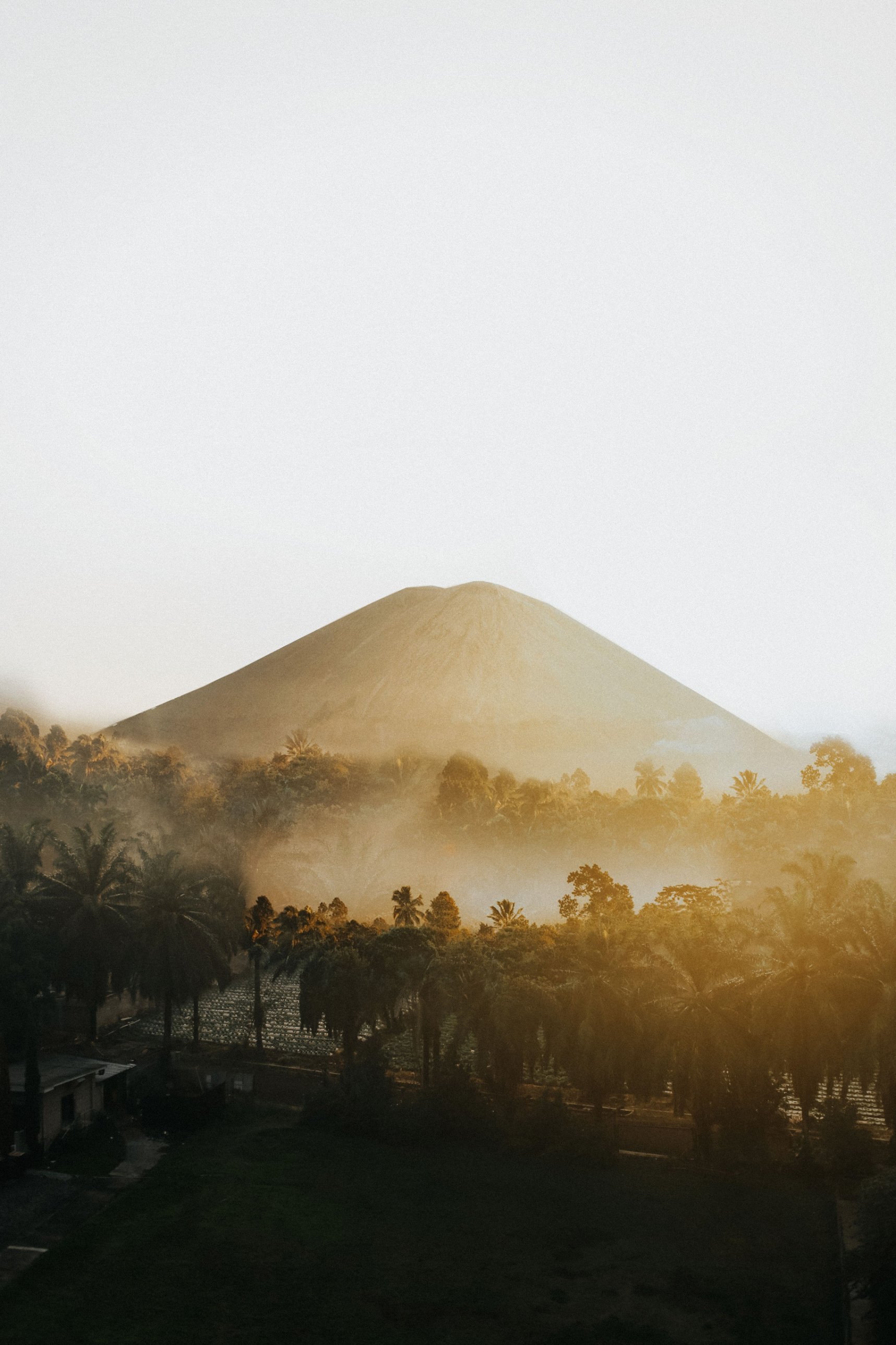
In the heart of New Guinea, one protected area runs from glaciers on the equator down through cloud forest and swamp to the mangroves of the Arafura Sea. Lorentz is one of the great wild places on Earth. It is also, in 2026, one of the most difficult and sensitive places in Indonesia to visit, and this page is honest about both.
What is Lorentz National Park?
Lorentz National Park (Taman Nasional Lorentz) is the largest protected area in Southeast Asia, covering about 2.35 million hectares of Indonesian New Guinea. It stretches more than 150 km from the glaciers of the central ranges to the southern coast on the Arafura Sea, and today spans parts of Central Papua, Highland Papua and South Papua provinces. UNESCO inscribed it as a World Heritage Site in 1999.
The park carries the name of the Dutch explorer Hendrikus Albertus Lorentz, whose expedition crossed the region in 1909 and 1910. The Dutch colonial government protected part of it as the Lorentz Nature Monument in 1919, but that protection lapsed in 1956 over unresolved land claims. Indonesia declared a strict nature reserve here in 1978, and in 1997 it became a national park, with an eastern extension that took in Puncak Trikora.
Why does Lorentz matter so much for nature?
Lorentz is the only protected area in the world that holds an unbroken, intact transect from permanent snow to tropical sea, including vast lowland wetlands. It sits where two continental plates collide, so its mountains are still rising, and fossil sites record the evolution of life on New Guinea.
Climb from the coast and you pass through mangroves, lowland rainforest, montane and mossy cloud forest, subalpine grassland, alpine heath and finally bare rock and ice. Each band has its own life. IUCN's 2025 assessment counts about 650 bird species, including at least 12 birds of paradise and 31 parrots, plus about 120 mammals, 324 reptiles and 90 amphibians.
Two tree kangaroos live here: Doria's tree kangaroo and the endangered dingiso, a black and white species of the high Sudirman Range that scientists first described in the mid-1990s. Echidnas, cuscuses, wallabies and quolls fill out the mammal list, and two cassowary species walk the forests. There are also Gondwanan relict southern beech (Nothofagus) forests, a reminder of New Guinea's ancient links to Australia.
That wildness is under pressure. IUCN's 2025 World Heritage Outlook rates the park's outlook as of significant concern, citing road building, around 19 mining concessions overlapping some 488 km² of the park, an oil and gas block, wildlife trade, invasive fish and climate change. The park had 69 staff at the last monitoring mission, with patrols largely limited to the accessible lowlands.
Are the glaciers on Puncak Jaya disappearing?
Yes. The ice near Puncak Jaya is the last tropical glacier in New Guinea and is shrinking fast. Indonesia's weather agency BMKG says it covered about 0.09 km² by September 2025 and expects it to disappear no later than 2026 or 2027.
The scale of the loss is striking. Estimates put the ice at around 19 km² in 1850, and BMKG measured the thickness of the remaining Carstensz Glacier and East Northwall Firn falling from 32 metres in 2010 to about 8 metres by 2021. Of the original group of six glaciers, two remain. Anyone who reaches the high peaks in 2026 may be among the last to see equatorial ice in Asia.
Can you climb Carstensz Pyramid?
Yes, but only as a guided, permitted expedition, and access can stop at short notice. Carstensz Pyramid, or Puncak Jaya, is the highest peak between the Himalayas and the Andes, and one of the Seven Summits. There is no public walk-up permit: an Indonesian operator coordinates government, police, military and local approvals for each team.
Current programmes fly by helicopter from Timika to Yellow Valley base camp at about 4,200 to 4,300 metres. The route is a technical rock climb with fixed lines and a Tyrolean traverse. Cloud regularly grounds helicopters for days, and operators warn that helicopter evacuation cannot be assumed. In March 2025 two Indonesian climbers died of suspected hypothermia or altitude sickness, and police temporarily halted climbing.
In October 2026, commercial teams were running but every departure was described as conditional until permits, local clearance and flights were confirmed. Book only with an established expedition company, and expect postponements.
Which parts of Lorentz can visitors reach?
Very few. Hotels sit outside the park in Timika and Wamena, a utilization zone for tourism covers less than half a percent of the park, and visitor numbers have always been tiny. Beyond Carstensz expeditions, the main point of access is Lake Habbema in the northern highlands.
Habbema lies at about 3,225 metres below Puncak Trikora, roughly three to four hours from Wamena by four-wheel drive on a rough road built in 1989 for tourism. Nights can drop to around freezing, there is nothing to buy, and a local guide is essential. Treks from Wamena to the lake have been sold with a surat jalan and park permit included. Beyond the lake, a section of the Trans-Papua Highway from Habbema towards Nduga and Kenyam opened in 2018. It is not a tourist route: it runs into one of the most conflict-affected regencies in Papua, and IUCN links it to logging and habitat loss inside the park. The southern lowlands, the land of the Asmat, are reached only by river and small aircraft and see almost no outside visitors.
Who lives in Lorentz National Park?
At least eight Indigenous groups have customary land in and around the park, including the Amungme, Nduga, Western Dani, Kamoro, Sempan and Asmat. The park's zoning sets aside about 559,000 hectares, nearly a quarter of its area, as a traditional zone for customary use.
In the lowlands, the Asmat live along rivers and swamps, combining sago with fishing. Highland peoples such as the Dani and Nduga farm the valleys. Estimates of the population living inside the park have ranged from about 6,300 to 10,000 people. This is their home, not an empty wilderness, and decisions about roads, mines and visitors affect them first.
Is it safe to visit Lorentz National Park?
For most travellers, not at present. The US State Department advises Do Not Travel to Central Papua and Highland Papua (advisory of July 2026), the two provinces that hold Puncak Jaya, Timika, Wamena and Lake Habbema. Australia advises reconsidering the need to travel there, and both warn that consular help is very limited.
The danger is real and recent. Armed separatist groups operate in the highlands and have kidnapped foreigners: New Zealand pilot Phillip Mehrtens was seized at Nduga airport in February 2023 and held for 19 months. On 8 August 2026, gunmen wounded two residents at the gate of the Baliem Valley Cultural Festival near Wamena, and in September 2026 police reported three civil servants shot dead in Jayawijaya Regency. Attacks have also occurred around the Freeport mine near Timika.
Lorentz is also physically demanding: altitude, cold rain, remote terrain and few evacuation options. Check your government's advice, confirm your insurance covers the region and the activity, and travel only with experienced local operators who can turn back when conditions change.
How do you get to Lorentz, and what permits do you need?
The two gateways are Timika, the starting point for Carstensz expeditions, and Wamena in the Baliem Valley, reached by air from Jayapura since no road links the two. Timika has domestic connections to other Indonesian cities. Schedules in Papua change often and delays are common, so check them close to departure and build in spare days.
Foreigners may need a travel permit, the surat jalan (Surat Keterangan Jalan), for parts of the Papua provinces, and a park permit is needed for areas such as Lake Habbema; local operators usually arrange both. Rules and fees change with the security situation and are not published in a reliable form, so confirm with your operator and the authorities before you go.
When is the best time to visit Lorentz?
There is no reliable dry season. Rain falls all year, with roughly 3,160 to 4,100 mm a year in the lowlands and 3,500 to 5,000 mm in the mountains, and clouds build quickly around the peaks.
Carstensz departures cluster when permits, security and helicopters line up rather than by weather, in 2026 teams climbed in March and June, and a cluster of departures ran from late September to early November. Pack for cold, wet conditions at any time of year.
How to visit Lorentz responsibly
If you go, go with Papuan guides and porters and pay them fairly. Ask before photographing people, respect sacred sites, and follow local and customary rules. Carry out every piece of rubbish. Never buy wildlife, feathers or crocodile products, and remember that the safest choice for you, and for the people who would have to rescue you, may be to wait until conditions improve.
