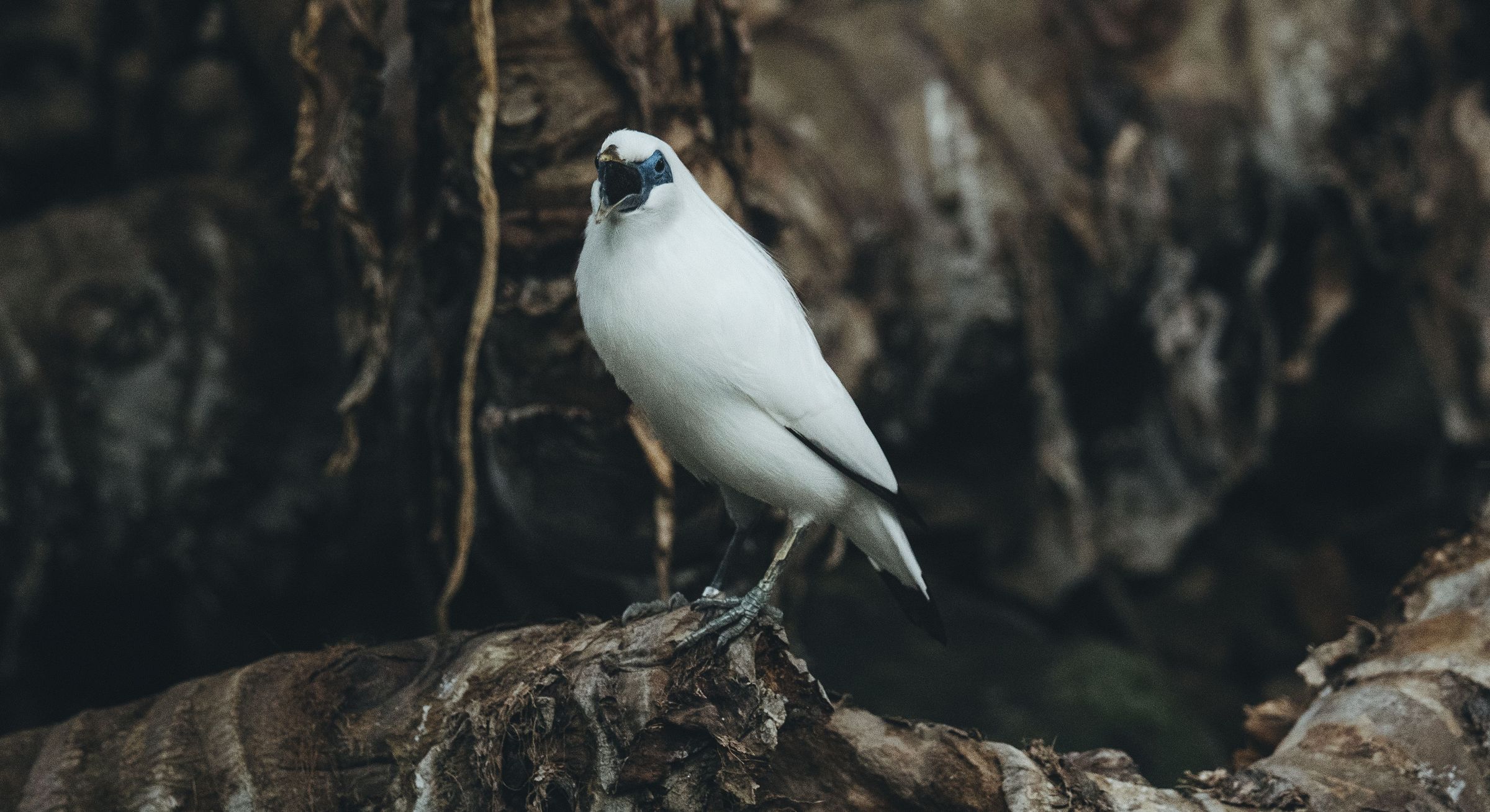
At the far western tip of Bali, a few hours and a world away from the southern beaches, the island's only national park protects dry monsoon forest, savanna, mangroves and the reefs of Menjangan Island. It is where Bali's own bird, the white Bali starling, was pulled back from the edge, and where divers come for calm, clear walls.
What is West Bali National Park?
West Bali National Park (Taman Nasional Bali Barat, often shortened to TNBB) is Bali's only national park, covering the island's far western tip in the regencies of Buleleng and Jembrana. It protects about 19,003 hectares, roughly 15,588 hectares of land and 3,415 hectares of sea, including Menjangan Island off the north coast. The area was first protected in 1941 and is managed today by the national forestry ministry from a headquarters at Cekik, just south of Gilimanuk.
The original reserve was far larger and was set up partly to protect the Bali tiger, which was already almost gone; the last confirmed records date from the 1930s. The park was later reduced to its present size. The heart of it is the Prapat Agung peninsula, which juts northwest towards Java and makes up close to half the park, separated from the forested hills of the interior by the coastal road.
Unlike most of Bali, this is quiet country. There are no rice terraces or big towns inside the park, only fishing villages along its edges, a handful of resorts near Pemuteran and Banyuwedang, and the ferry port of Gilimanuk, which lies just outside the boundary.
Why does West Bali National Park matter?
It holds the last natural lowland habitats in western Bali, from savanna and dry monsoon forest to mangroves, seagrass, beaches and coral reef, and it is the only place where the Bali starling survives in its original wild range. The forest climbs to 698 metres on Gunung Kelatakan, with Gunung Prapat Agung at 375 metres on the peninsula.
About 160 bird species are recorded, among them the crested serpent eagle, the milky stork and the stork-billed kingfisher. Mammals include banteng, the wild cattle of Java and Bali, rusa deer, Indian muntjac, Javan langur, wild boar and leopard cat, and hawksbill turtles use the coast. Underwater, surveys around the end of the last century counted at least 110 coral species from 18 families. The forests also hold sandalwood and Indian rosewood, both valuable timber trees.
What is the Bali starling and where can you see it?
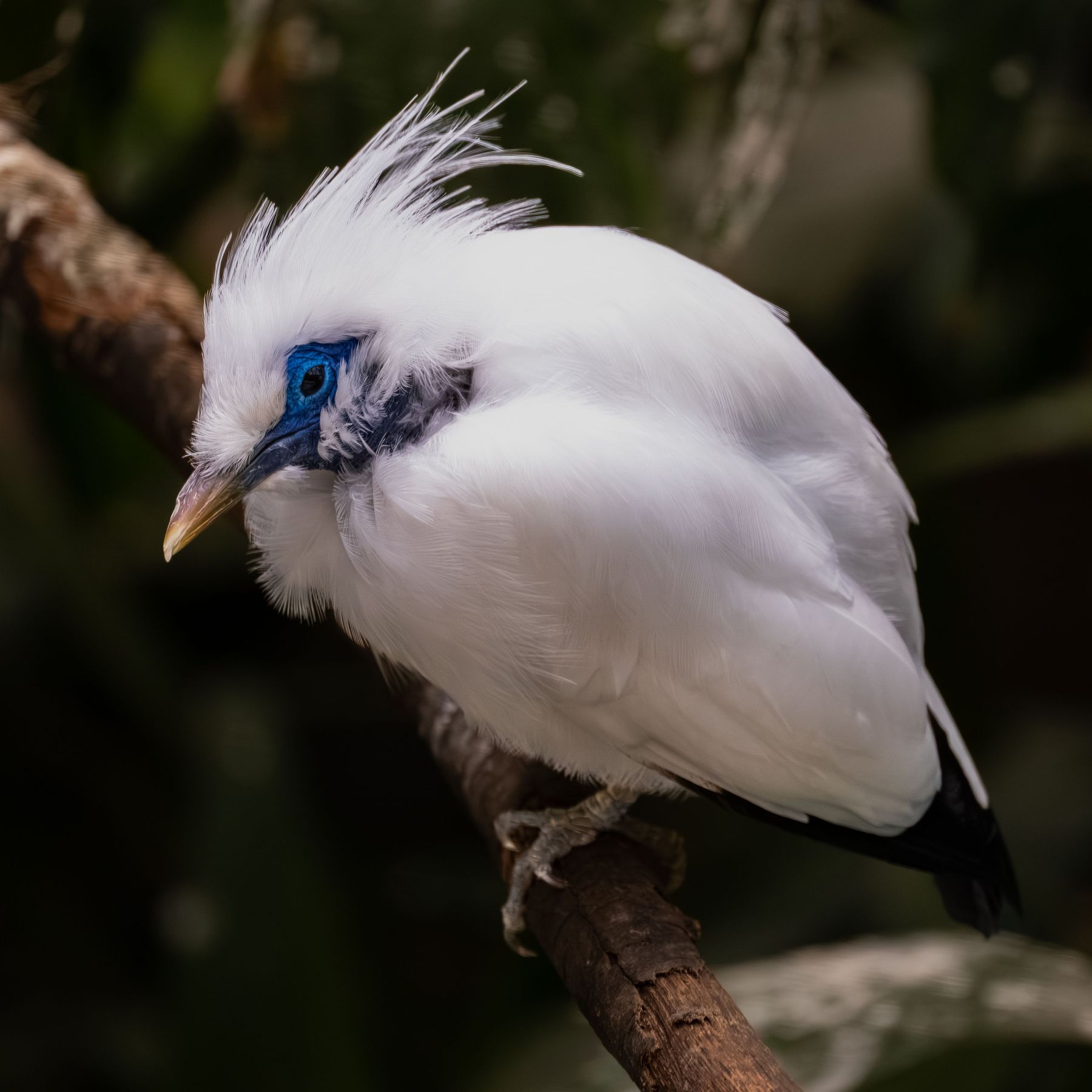
The Bali starling, or jalak Bali (Leucopsar rothschildi), is a white bird with black wing tips and bare blue skin around the eyes, found naturally only in northwest Bali. It is listed as Critically Endangered and is protected under CITES Appendix I. Your best chance to see one in the wild is on a guided walk inside the park, early in the morning.
Poaching for the cage-bird trade pushed it to the brink: by around 2001 only about six birds were thought to survive in the wild, all in this park. Captive breeding, repeated releases and help from neighbouring villages turned that around. In June 2011 alone, 60 captive-bred birds were released, and by 2022 the park reported around 560 birds in the wild. Release sites include Labuhan Lalang, Cekik and Tanjung Gelap, and villages such as Sumberklampok now breed starlings themselves.
Visitors can see birds at the breeding centre near the Sumber Klampok entrance, though wire mesh separates you from them, and guides can take you to Teluk Brumbun, a release area on the mainland opposite Menjangan. The species is not safe yet. Poaching still happens, genetic diversity is low, and a planned North Bali airport has been reported to require about 64 hectares of park habitat.
What is diving and snorkelling at Menjangan Island like?
Menjangan is a small island of about 175 hectares off the park's north coast, and it offers some of Bali's calmest and best-preserved reef diving. Walls start in the shallows and drop to around 40 metres, currents are usually gentle, and visibility is often 15 to 30 metres. It suits new divers and snorkellers as well as photographers.
The best-known sites are POS II, Garden Eel Point, Coral Garden, Bat Cave, Temple Point and the Anchor Wreck, where an old anchor lies at about 7 metres on the reef and a wooden wreck rests on sand at around 30 to 40 metres, a dive for experienced divers only. Expect sea fans, whip corals and soft corals on the walls, turtles, and plenty of small life for macro photographers.
Snorkellers can enjoy the shallow reef tops on the south side and Coral Garden on the north when conditions allow. One warning: the water is so clear and the walls so steep that it is easy to sink deeper than planned. PADI notes Menjangan has the highest rate of decompression sickness of any Bali dive site, so watch your computer, ascend slowly and always make a safety stop.
What else can you do in West Bali National Park?
Beyond Menjangan, the park is for walking, birding and quiet water. Guided treks, cycling, mangrove tours by canoe and birdwatching can all be arranged at ranger stations, and every activity inside the park must be done with a park guide.
Teluk Terima, with its streams and forest, is a favourite for jungle walks and birding, and Tegal Bunder in the centre of the park mixes mangrove, savanna and swamp. The former fishponds at Banyuwedang on the eastern edge draw waterbirds. On the mainland side, at Gilimanuk, Secret Bay is a shallow muck-diving site known among photographers for small, unusual creatures.
Which temples are inside West Bali National Park?
Menjangan Island has several Hindu temples, and many Balinese cross to pray there, especially on holy days. Pura Gili Kencana, said to date back to the 14th century, is the best known, and a large white Ganesha statue stands at a temple gateway near the island's jetty. On the Prapat Agung peninsula, Pura Dang Kahyangan Prapat Agung is linked to the journey of the priest Dang Hyang Nirartha.
These are working temples, not attractions. Bring a sarong and sash to wear inside, keep your voice down, do not climb on shrines, and give way to ceremonies and anyone praying.
When is the best time to visit West Bali National Park?
The best time is the dry season, from about April to November, when the north coast sea is calm and visibility at Menjangan is at its best. October and November often bring the clearest water of the year. The park and Menjangan can be visited all year, though boats may be cancelled in rough weather.
From roughly December to March the wet season brings heavier rain, greener forest and more chance of choppy crossings. Mornings are best in any season: rangers open at 8 am, wind tends to pick up later in the day, and birds are most active at dawn.
How do you get to West Bali National Park?
Most visitors drive from south Bali, a journey of about four hours from the airport area, either along the north coast via Pemuteran or along the main west road through Negara to Gilimanuk. Boats to Menjangan leave from Labuhan Lalang on the north coast, about 15 minutes from Pemuteran and a short drive from Gilimanuk.
From Java, car ferries cross the Bali Strait from Ketapang to Gilimanuk, landing right beside the park headquarters at Cekik. A planned Gilimanuk to Mengwi toll road has not been built: as of mid-2026 the project was being re-prepared for a new tender, so allow for slow traffic on the busy two-lane western road.
The boat crossing to Menjangan takes about 20 to 30 minutes. Pemuteran is the main base, with most dive centres and guesthouses, and Banyuwedang has a few resorts. Check boat and ferry times locally, especially in rough weather.
What does it cost to visit West Bali National Park?
The park fee for foreign visitors has been IDR 200,000 per person on weekdays and IDR 300,000 on weekends and public holidays, with Indonesian visitors paying far less. Diving, snorkelling, trekking and guides are charged on top, and combining activities on one day usually works out cheaper. Several Indonesian national parks raised their fees in late 2024, so check the current rate before you go.
You pay at the ranger offices at Labuhan Lalang, Teluk Terima or Sumber Klampok, which open from 8 am to 3 pm; for an early start, book the day before. Dive and snorkel operators in Pemuteran usually include park fees, boat and guide in their price, which varies with group size. There is nothing to buy on Menjangan, so bring water, snacks and cash.
How to visit West Bali National Park responsibly
Menjangan's reefs are in good shape partly because boats tie up to mooring buoys instead of dropping anchor; a community programme has installed and maintains dozens of them. Choose operators that use the buoys, never stand on or touch coral, and keep good buoyancy along the walls. Do not feed fish, take rubbish back to shore, and pick up stray plastic if you can.
On land, go with a park guide, keep your distance from wildlife, and never buy a Bali starling or any wild bird. Paying the park fee and hiring local guides and boatmen supports the villages that help protect this corner of Bali.
