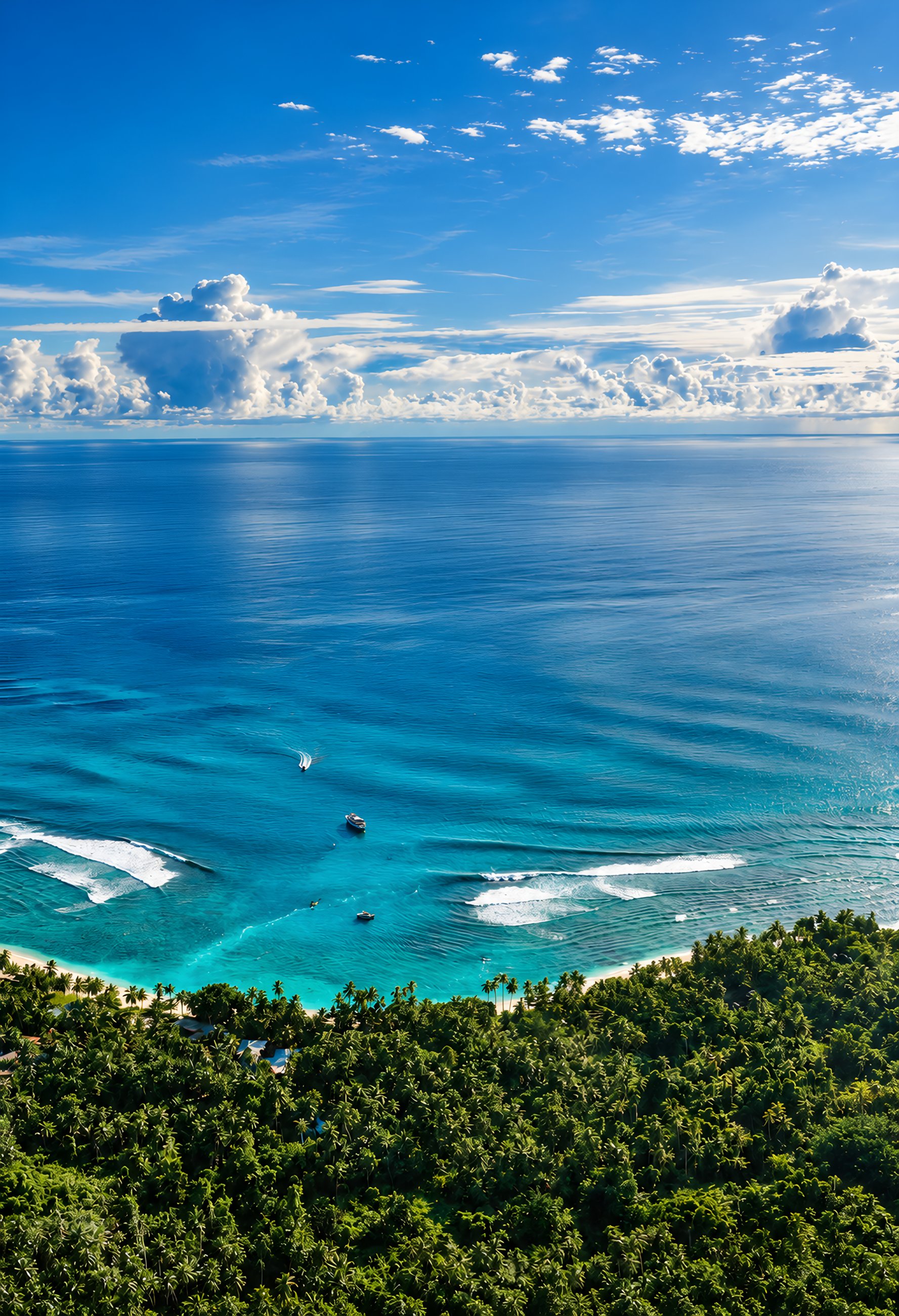
At the far western tip of Java, a forested peninsula looks out over the Sunda Strait towards Krakatau. Ujung Kulon is the only place on Earth where Javan rhinos still live, and one of the few places on crowded Java where lowland rainforest still runs unbroken down to the sea.
What is Ujung Kulon National Park?
Ujung Kulon National Park (Taman Nasional Ujung Kulon) is a protected area at the westernmost tip of Java, in Pandeglang Regency, Banten. It was declared a national park in 1992 and, together with the Krakatau Nature Reserve, has been a UNESCO World Heritage Site since 1991. It is best known as the last home of the critically endangered Javan rhino.
The park covers about 122,950 hectares, of which roughly 78,600 are land and 44,300 are sea. It takes in the Ujung Kulon peninsula itself, the large island of Panaitan, the smaller islands of Peucang and Handeuleum, and the Gunung Honje range on the mainland side, which rises to about 620 metres. UNESCO lists it for holding the largest remaining area of lowland rainforest on Java.
Protection here is old. Panaitan and the peninsula were first declared a nature reserve in 1921, and the park is often described as the forerunner of Indonesia's national park system. The Javan tiger survived here until the mid-1960s, longer than almost anywhere else.
Why does Ujung Kulon matter for the Javan rhino?
Ujung Kulon holds the entire wild population of the Javan rhino, one of the rarest large mammals in the world. The last Javan rhino in Vietnam died in 2011, so every surviving animal lives on this one peninsula. The species is listed as critically endangered by the IUCN.
Numbers have been tracked by camera traps for decades. The park recorded about 80 rhinos at the end of 2024, and a 2025 estimate by the Ministry of Forestry and IPB University researchers, using a spatial model, put the population at 87 to 100. Some conservationists question the upbeat counts, because the recent past has been grim.
In 2024 police exposed a poaching network that may have killed up to 26 rhinos between 2019 and 2023, roughly a third of the population. The lead poacher, Sunendi, received a record 12-year sentence in June 2024, and further convictions followed in 2024 and 2025. In May 2025 camera traps and footprints revealed three new young rhinos, a small but welcome sign.
Having every rhino in one place is itself a risk, with Anak Krakatau and the tsunami-prone Sunda Strait close by. In the Gunung Honje area, the park and the Rhino Foundation of Indonesia (YABI) have built a 5,000-hectare Javan Rhino Study and Conservation Area, cleared invasive Arenga palm so rhino food plants can return, and plan to use it as a staging ground for a future second population.
Can you see a Javan rhino in Ujung Kulon?
Almost certainly not. Javan rhinos are shy, few and live in dense forest, and park rules strictly forbid any contact with them. Most visitors see fresh tracks, wallows or droppings at best, and even rangers rely on camera traps.
What you will see is plenty of other wildlife. Banteng, the wild cattle of Java, graze in open meadows, and long-tailed macaques, deer and wild boar wander around Peucang. Javan gibbons call from the forest of Handeuleum and Gunung Honje, green peafowl display in the grasslands, and Javan leopards and dholes live here too, though they are seldom seen.
What are the main highlights of Ujung Kulon?
Most trips are built around Pulau Peucang, the park's main visitor base, with lodging, a restaurant and a ranger post. Its white-sand beaches and calm water are good for snorkelling, with sites such as Cikembang, Cikuya and Citerjun. On its west side, Karang Copong is a rock formation with a hole through the middle and a classic sunset spot.
Across the channel on the peninsula, the Cidaon grazing ground has a viewing tower where banteng and peafowl come out to feed, usually best in the late afternoon. From Cibom, a forest trail of about 1 km leads past hollow kiara fig trees to Tanjung Layar, the westernmost point of Java, with the ruins of Dutch colonial lighthouses, an old prison and a working lighthouse above the sea.
On the eastern side, Pulau Handeuleum is the starting point for canoe trips up the Cigenter River, a quiet waterway through mangroves and rainforest paddled with a ranger. Crocodiles and snakes live along the river, so stay in the boat. Further out, Panaitan is known for surf and snorkelling, and the forest trails of Gunung Honje suit gibbon spotting and birdwatching.
Longer guided treks cross the peninsula itself, including multi-day routes along the south coast between Tamanjaya and Tanjung Layar. These are hot, exposed walks on soft sand with long sections in full sun, best for fit walkers with a ranger.
Can you visit Krakatau from Ujung Kulon?
Usually yes, by boat, but not at the moment. Anak Krakatau was raised to Level III (Siaga) on 9 October 2026 after a run of eruptions, and visitors are barred from a 5 km radius around the crater. Check the latest status on MAGMA Indonesia before planning any Krakatau trip.
The Krakatau islands lie in the Sunda Strait, around 50 to 60 km north of the park, and are part of the same World Heritage property. The 1883 eruption sent a tsunami across this coast that destroyed many settlements on the peninsula, which were never rebuilt, and that is a large part of why the forest here is so intact today. In September 2026 park staff felt tremors from a 25-hour eruption, but reported no change in rhino behaviour.
Who lives around Ujung Kulon?
No one lives inside the core of the peninsula, but farming and fishing villages line the park's eastern edge, around Tamanjaya, Ujungjaya and Sumur. Some have been developed as tourism villages with homestays, local guides and boat owners, and they are the people who make most trips possible.
This is a Sundanese and largely Muslim region. The Sanghyang Sirah cave near Tanjung Layar is a sacred site visited by pilgrims; it is reached by boat and a walk of about 45 minutes, and visitors go with a ranger or local caretaker (kuncen) and follow their customs. Dress modestly in villages and ask before photographing people. The coast also remembers the December 2018 Sunda Strait tsunami, which struck the shores along the route to the park.
When is the best time to visit Ujung Kulon?
The best time is the dry season, roughly April to October, when trails are firmer, seas are calmer for the boat crossings and wildlife watching is easier. The wettest months, around December to February, bring the west monsoon, rough water and flooded trails in places.
Even in the dry season, expect sudden showers, heat and humidity on the treks. Weekends and Indonesian holidays bring groups from Jakarta to Peucang, so midweek trips are quieter, and the island lodge should be booked well ahead.
How do you get to Ujung Kulon?
Most visitors come from Jakarta, either by road to Tamanjaya on the park's edge or by road to the west coast and then by boat. Allow a full day each way, and check road and boat conditions before you leave.
By road, it is about 2 hours from Jakarta to Serang on the toll road, 2 more to Labuan, where the park's main office is, and a little over 2 more via Panimbang and Sumur to Tamanjaya. The last stretch is narrow and rough in places. Buses run from Jakarta's Kalideres terminal to Labuan, and minibuses continue towards Sumur and Tamanjaya, but services are infrequent.
By sea, chartered boats from Carita take about 2 to 3 hours to Peucang, and boats from Sumur or Tamanjaya take close to 3 hours, less on a fast boat. The open water off the peninsula can be rough, so use a well-equipped boat with life jackets. Many travellers simply book a package tour from Jakarta or Anyer that bundles transport, permits, guide, boat and lodging.
What does it cost to visit Ujung Kulon National Park?
Foreign visitors pay an entrance fee of around IDR 150,000 to 225,000 per day as of 2026, depending on whether it is a weekday or a holiday, while Indonesians pay a few thousand rupiah. Every visitor also needs an entry permit (SIMAKSI), and an official park guide or licensed nature guide is required for all activities. Check current rates before you go.
Tickets and permits are sold at the park offices in Labuan and Tamanjaya during office hours. Boat charters are the biggest cost and are best shared; organised trips of two or three days, including boat, meals and lodging on Peucang, are the most common way to visit. Bring enough cash, as there are no banks inside the park.
Is Ujung Kulon safe, and how do you visit responsibly?
Ujung Kulon is safe for visitors who go with a guide and respect the sea and the forest. The main risks are rough boat crossings, heat on exposed trails, and mosquitoes; malaria has been reported in the area, so ask a travel doctor about precautions. Wear long sleeves and trousers tucked into socks against thorns and leeches, and keep your distance from banteng, crocodiles and snakes.
Pay your fees, hire local guides and boatmen, and stay on existing trails. Park rules ban hunting, collecting plants or animals, alcohol, pets, open fires and loud noise, and ask visitors to avoid strong perfumes. Take all rubbish out with you, and never approach or follow signs of a rhino: in a population this small, every animal counts.
