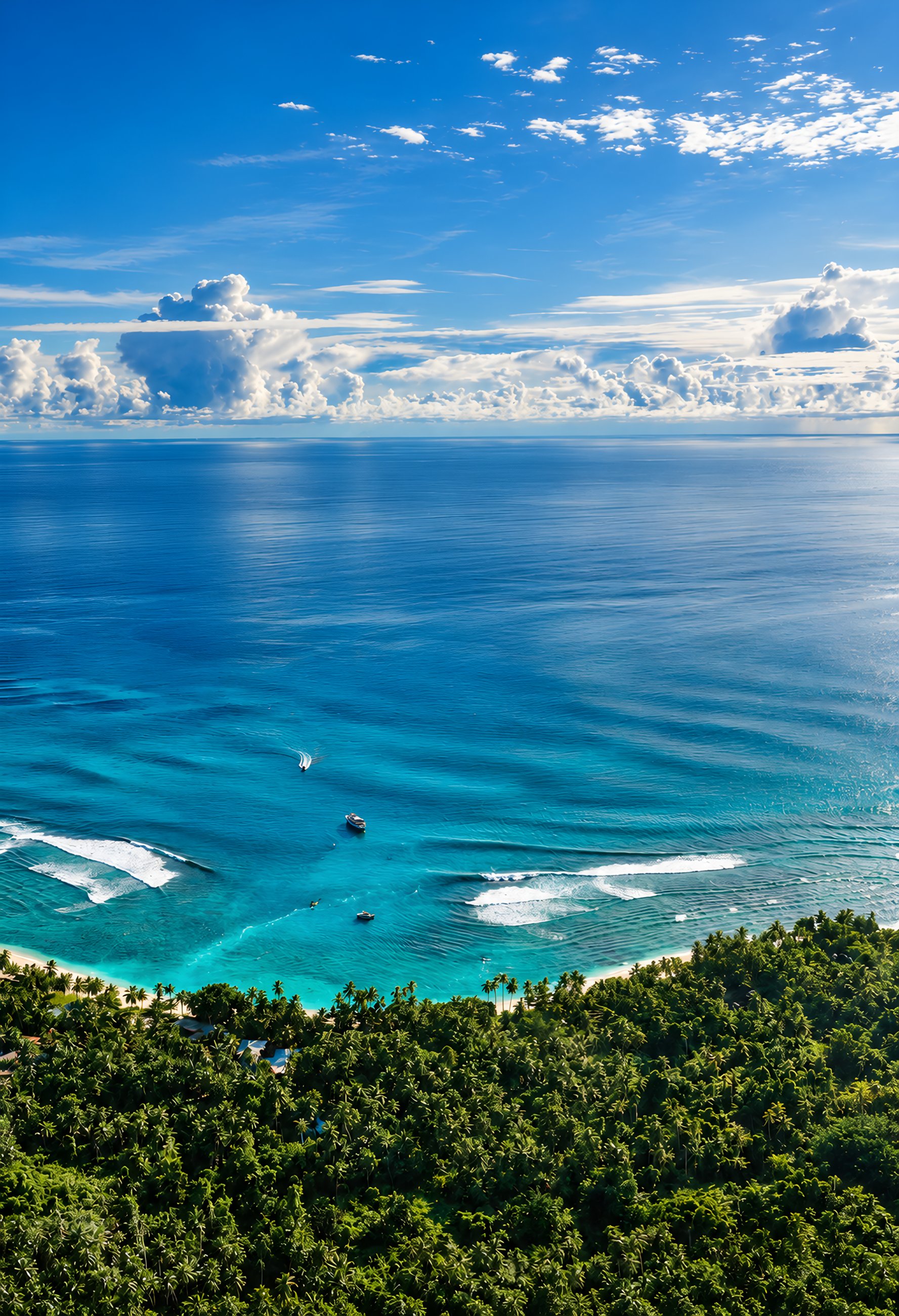
In the sheltered Gulf of Tomini, right in the curve of Sulawesi's strange shape, a scatter of forested islands sits on some of the richest reefs in Indonesia. The Togean Islands take a long day or two of travel to reach, have no ATMs and little phone signal, and that is exactly why people who make the trip tend to stay longer than planned.
What is Togean Islands National Park?
Togean Islands National Park (Taman Nasional Kepulauan Togean) protects an archipelago in the Gulf of Tomini, off Central Sulawesi, in Tojo Una-Una Regency. It was declared a national park in 2004, and a 2014 decree set its area at 365,241 hectares, of which about 340,000 hectares are sea. In 2019 UNESCO added the Togean Tojo Una-Una Biosphere Reserve to its world network.
The archipelago counts 56 islands and many more islets. The largest are Batudaka, Togean and Talatako, with Malenge, the two Walea islands and the volcanic island of Una-Una around them. About 42,000 people live in 59 villages across the islands, so the park is a working seascape of fishing villages, coconut groves and small farms, not an empty wilderness. Wakai, on Batudaka, is the main port and the closest thing to a town.
Why are the Togean Islands important for wildlife?
The Togeans sit inside the Coral Triangle and inside Wallacea, so they are rich both underwater and on land. The park is commonly credited with around 315 coral species and nearly 600 reef fish species, and long isolation in the gulf has produced animals found nowhere else.
The best known is the Togean macaque (Macaca togeanus), so closely tied to Malenge that locals call it the monkey island; some scientists treat it as a form of the Tonkean macaque of mainland Sulawesi. The Togian babirusa, a pig with curling tusks, lives only here. Birders come for two species described only recently: the Togian hawk-owl, discovered in 1999, and the Togian white-eye, described in 2008.
Coconut crabs, the largest land-living arthropods in the world, hide by day in rock crevices and old wood along the coasts and come out at night. They are also hunted and sold, and fishers in villages such as Kadoda say they have become hard to find, so treat any sighting as a privilege rather than a menu item.
What are the highlights of the Togean Islands?
Most visitors base themselves on one or two small islands with simple beach bungalows and spend their days on the water. Kadidiri, with its white-sand beach and clear water, has long been the most popular island with foreign visitors. Other lodges are spread around the larger islands and on small islets such as Buka Buka.
The classic day trip is to Danau Mariona, a small brackish lake near the village of Lembanato in the central islands, where jellyfish have lived for so long without predators that their sting is too weak to feel. Visitors swim among them. Jellyfish lakes elsewhere in Indonesia have emptied when water temperatures rose, so ask your host whether the jellyfish are present before you go.
On Malenge, mangrove channels and forest tracks give the best chance of seeing macaques and hornbills. The plank bridge from Pulau Papan to Malenge, well over a kilometre long, is a sight in itself. Further north, Una-Una is a volcanic island whose people were evacuated before an eruption in 1983; it is now the base for some of the park's best deep diving.
What is diving and snorkelling in the Togean Islands like?
Diving here is mostly relaxed: calm water, gentle currents and reefs that start just below the surface, with deeper walls and pinnacles for experienced divers. Water temperature stays around 27 to 30 °C all year, so a thin wetsuit is enough.
The most famous site is the wreck of an American B-24 bomber that ditched near Togean Island in May 1945. It sits upright on sand with its wings still in place, and schools of bigeye trevally gather around it. Taipi Wall is an easy wall with overhangs and a shallow coral garden. Pasir Tengah, a reef rising from deep water, and the pinnacles and walls off Una-Una, such as the Pinnacle and Apollo, bring reef sharks, barracuda and eagle rays, with stronger currents and deeper profiles.
Snorkellers do very well because so much coral lies in a few metres of water off the beaches and around the islets. House reefs at most lodges are worth a slow swim, especially in the morning when the water is flattest.
Who are the Bajau of the Togean Islands?
The Bajau, or Bajo, are seafaring people who have fished the reefs of eastern Indonesia for generations. In the Togeans their best-known village is Kabalutan, in Talatako district, a dense settlement of stilt houses built over the water. Village elders in Benteng date the first Bajau arrivals to 1835.
They share the islands with the Togian people and settlers from mainland Sulawesi. Pulau Papan, a stilt village linked to Malenge by its long wooden bridge, is mostly Togian. Visit villages with a local guide or your lodge, ask before taking photographs, dress modestly, and buy fish, snacks and handicrafts locally.
When is the best time to visit the Togean Islands?
The Togeans can be visited all year because the Gulf of Tomini is sheltered and rarely rough. The drier months, roughly April to October, usually bring the calmest seas, sunnier days and the clearest water, with visibility often 20 to 40 metres. From about November to March or April rain is more frequent and visibility can drop to around 10 to 18 metres.
Weather also affects the journey. Boat schedules from Ampana and Gorontalo can slip or be cancelled in bad weather, so leave a spare day at each end of the trip, particularly if you have a flight to catch.
How do you get to the Togean Islands?
Most travellers reach the Togeans from Ampana on the Central Sulawesi coast, then take a boat to Wakai on Batudaka. The other route is the overnight ferry from Gorontalo in the north. Schedules change often, so check them close to your travel date.
Ampana has a small airport, Tanjung Api, but in 2026 its only scheduled service is a small Susi Air plane from Palu twice a week. Most people fly into Luwuk, which has daily flights, including direct services from Jakarta, and drive about five hours to Ampana, or drive about eight hours from Palu. Public speedboats leave Ampana each morning for Wakai, a trip of around one and a half hours, and slower public ferries make the crossing in about four to five hours a few times a week, continuing to other islands.
From Gorontalo, the Tuna Tomini ferry crosses to Wakai a few times a week in around 12 to 13 hours, mostly overnight. Inside the park, lodges collect guests from Wakai, and chartered local boats link the islands.
What does it cost to visit Togean Islands National Park?
Foreign visitors pay a national park entrance fee, traditionally collected at the ports of Ampana, Wakai or Dolong as you arrive. The rate has changed over the years, so check it before you go, pay only at an official point and keep one receipt per person.
There are no ATMs on the islands and most lodges do not take cards, so bring all the cash you need from the mainland. Accommodation is mostly simple beach bungalows with meals included and suits a modest budget, with a few more comfortable lodges and dive resorts at higher prices. Diving is charged per dive, and boat charters between islands add up quickly.
Is it safe to visit the Togean Islands?
The Togeans are generally a safe, quiet place to travel, and the main risks are remoteness and the sea. Medical care is basic and evacuation is slow, so carry a first-aid kit, have dive insurance, and dive only with an established operator.
Una-Una is an active volcano; check its alert level with the Indonesian volcano agency before diving or landing there. Saltwater crocodiles have been reported in the islands, so take local advice before swimming in channels or estuaries. Phone signal and internet are weak or absent on many islands, so tell someone your plans. Wear a life jacket on small boats and do not set out in rough weather.
How to visit the Togean Islands responsibly
The reefs here have suffered from blast fishing and illegal logging, and a 2016 review rated 25 of 90 dive sites in poor condition. Pay the park fee, hire local guides and boatmen, and never buy coconut crabs, turtle products or coral. Underwater, keep good buoyancy, do not touch or stand on coral, and do not chase turtles or feed fish. In the jellyfish lake, swim gently, use no fins and wear no sunscreen. Take your rubbish, especially plastic, back to the mainland.
