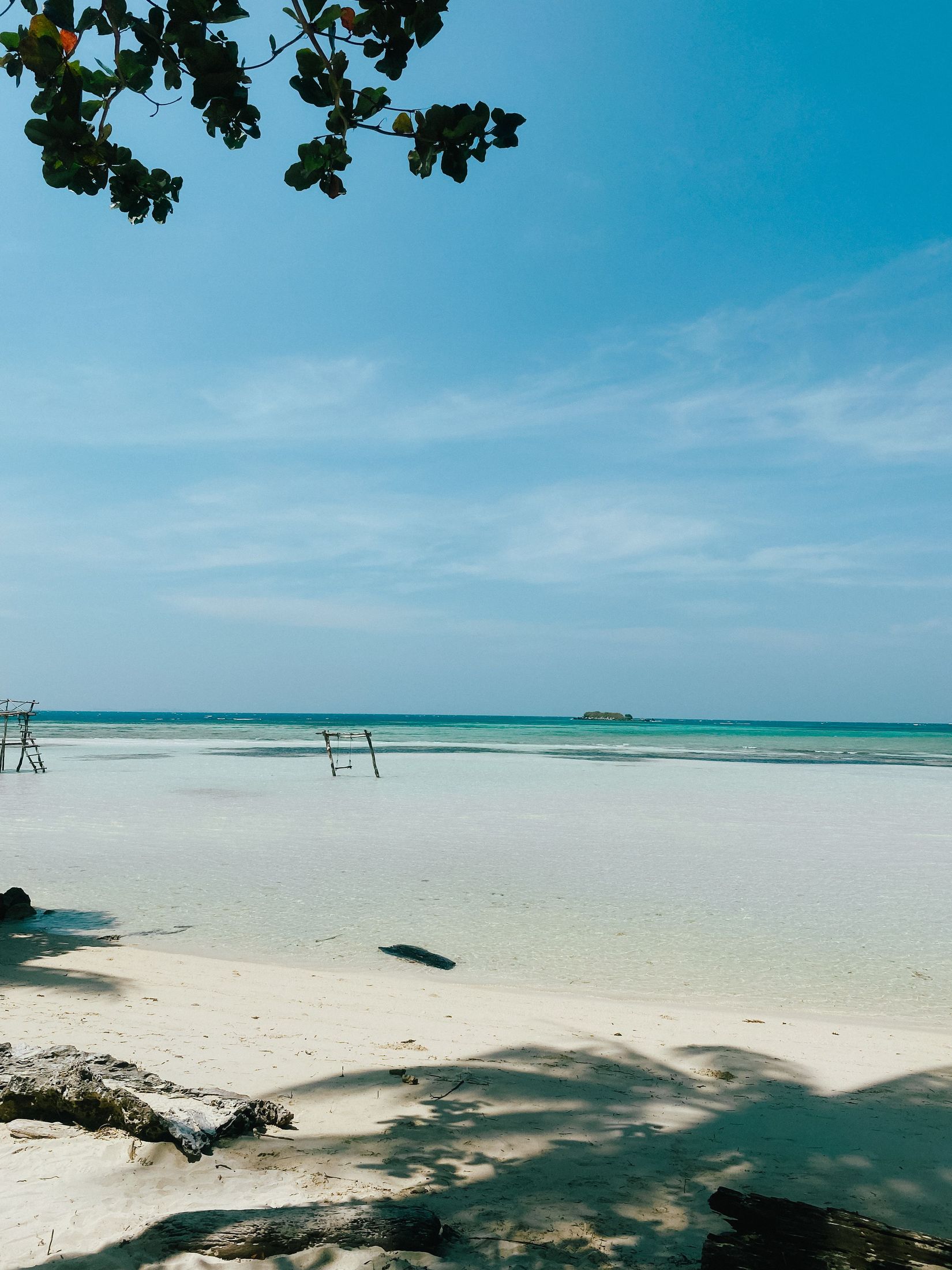
About 45 nautical miles north of Jepara, a scatter of low green islands rises out of the Java Sea. Karimunjawa is the closest true island escape to Java's big cities: white-sand islets, shallow reefs, mangrove channels and fishing villages, all inside a national park that is still working out how to protect itself from its own popularity.
What is Karimunjawa National Park?
Karimunjawa National Park (Taman Nasional Karimunjawa) is a marine park in the Java Sea, about 45 nautical miles north of Jepara on the north coast of Central Java. It covers about 111,625 hectares, of which only around 1,508 hectares are land, and takes in 22 of the archipelago's 27 islands. The rest is sea: coral reefs, seagrass beds and open water.
Protection came in stages. A 1986 forestry decree made the waters a marine nature reserve, a 1988 ministerial statement declared a national park, and a 1999 decree fixed today's boundaries. The park was also classed as a marine conservation area in 2001, its zoning has been revised several times since, and in 2020 UNESCO recognised the wider Karimunjawa Jepara Muria Biosphere Reserve.
Like most Indonesian marine parks, Karimunjawa is lived in. Around 10,000 people live on five of the islands, mostly on the main island of Karimunjawa and on Kemujan next door, so zoning decides where fishing, tourism and strict protection apply.
Why do Karimunjawa's reefs and mangroves matter?
Karimunjawa protects several coastal ecosystems in one compact area: fringing coral reefs, seagrass meadows, mangrove forest and lowland coastal forest on the larger islands. WCS describes it as critical habitat for key fish species in Karimunjawa and the wider Java Sea.
The Wildlife Conservation Society, which has worked in the park for years, records 509 reef fish species, 76 genera of hard coral, nine seagrass species, three species of sea turtle and 45 mangrove and associated species. Hawksbill and green turtles nest on some of the beaches.
The reefs are not untouched. Overfishing, destructive methods such as cyanide fishing and anchor damage have all taken a toll, and coal barges heading for power plants on the Java coast have sheltered and anchored in the park's calm waters, damaging coral where they drop anchor.
Which islands and sights should you see in Karimunjawa?
Most visitors base themselves in Karimunjawa town on the main island and see the rest on day trips by boat. The classic day is island hopping: a local boat, three or four snorkelling stops, a grilled fish lunch on a beach and a sunset on the way back.
Small islands such as Menjangan Kecil, Menjangan Besar, Cemara Kecil and Geleang are regular stops, with the route chosen by the boatman according to the wind. Another favourite is the Indonor wreck, a ship of about 30 metres that sank in 1960 and now lies in snorkelling depth.
On land, Kemujan has a mangrove boardwalk of about 1.3 km with a viewing tower around 20 metres high, good for birdwatching and for views across the mangroves to nearby islands. Bukit Joko Tuo is a hill viewpoint above town, and the tomb of Sunan Nyamplungan, the Islamic teacher who local tradition says first settled the islands, is a pilgrimage site.
What is snorkelling and diving in Karimunjawa like?
Karimunjawa is above all a snorkelling destination. The reefs are shallow and close to the islands, the water is warm, and almost every boat trip includes several stops, with masks, fins and life jackets usually provided. Diving is possible too, but the park is better known for easy, shallow reefs than for big-animal diving.
Expect hard corals, giant clams, reef fish and the occasional turtle. Conditions vary with the season and with the side of the archipelago you visit, which is why tours run to the west or east of the main island depending on the weather. Guides on budget trips often speak little English, so if you are a weak swimmer, ask for a life jacket and stay close to the boat.
Visibility and coral condition differ a lot from site to site. Some reefs near busy anchorages are worn, while others away from the main routes are in better shape. Snorkel with fins and never stand on the reef, even in shallow water.
Who lives in the Karimunjawa islands?
Most people in Karimunjawa are Javanese, alongside Bugis, Madurese and Bajau (Bajo) families whose ancestors came by sea, plus smaller groups from Buton and elsewhere. The 2020 census counted 9,789 residents. Fishing, seaweed farming and, more and more, tourism are the main livelihoods.
The Bugis are the largest of the seafaring groups and are concentrated on Kemujan, where you can still see Bugis-style wooden houses. Karimunjawa is a Muslim community, so dress modestly in villages, ask before photographing people, and be aware of prayer times, especially around Friday midday.
When is the best time to visit Karimunjawa?
The best time to visit Karimunjawa is roughly April to October, when the weather is drier and the sea is usually calmer. The risky period is the west monsoon, from about December to February, when high waves regularly cancel the ferries for days at a time. Plan buffer days if you travel then.
The cancellations are real. In January 2026 all Jepara crossings were suspended for several days as waves reached up to 2.5 metres, and in late December 2022 around 500 tourists were stranded on the islands until a Pelni ship evacuated them to Semarang. Check the BMKG marine forecast before you go.
Weekends and Indonesian holidays bring crowds from Java, and fast boat tickets can sell out. For quieter islands and easier bookings, travel midweek outside school holidays.
How do you get to Karimunjawa?
Most travellers reach Karimunjawa by boat from Kartini Port in Jepara. The KMC Express Bahari fast boat takes about 2 to 2.5 hours, and the KMP Siginjai car ferry about 4.5 to 5 hours. Schedules change often and depend on the weather, so always check them before you travel.
As of August 2026, Express Bahari ran from Jepara every day, usually at 09:00 (10:00 on Sundays and 11:00 on Saturdays), and Siginjai left Jepara at 07:00 on Mondays, Wednesdays and Saturdays and at 06:30 on Fridays. Express Bahari is booked through its own app, and Siginjai, which also carries cars and motorbikes, through ASDP's Ferizy system.
Sailings from Semarang have been irregular. Pelni ships such as KM Kelimutu have called at Karimunjawa on their Semarang routes, but check current Pelni schedules. In the air, Susi Air began flights in July 2025 to Dewadaru Airport on Kemujan from Semarang and Yogyakarta, about an hour in a small Cessna Grand Caravan; confirm the route is still running before you plan around it.
What does it cost to visit Karimunjawa National Park?
Indonesia's official tourism site lists a park entrance fee of around IDR 150,000 for foreign visitors and IDR 5,000 for domestic visitors. Park staff collect fees at Karimunjawa harbour and at the airport under national rules updated in 2024, so check the current rate before you go and keep your ticket.
On top of that, some sites charge small local fees: the Kemujan mangrove trail charged IDR 5,000 in 2024. Ferry fares depend on boat and class; in 2024 published fares ran from around IDR 50,000 to IDR 220,000 one way. A shared island-hopping boat trip with snorkelling gear and lunch is typically priced at around IDR 150,000 to 300,000 per person (2025). Bring enough cash for your whole stay.
What threats does Karimunjawa National Park face?
The biggest recent threat was illegal shrimp farming. From around 2016, intensive shrimp ponds spread on Karimunjawa, drawing seawater from the park and discharging waste back into it. Government investigators said the waste damaged coral reefs and caused skin irritation for tourists.
A 2023 regional regulation banned shrimp farming in Karimunjawa, enforcement teams removed hundreds of intake pipes, and in 2024 four operators were named as suspects and their case passed to prosecutors. The park head said in June 2024 that the illegal farms had been closed. Along the way, local activist Daniel Frits Maurits Tangkilisan was sentenced over a Facebook post criticising the farms, before the Semarang High Court overturned the verdict in May 2024. Overfishing, anchoring barges and the pressure of tourism on small islands remain ongoing concerns.
How to visit Karimunjawa responsibly
Pay the park fee, which funds patrols and management. Choose boat operators who moor or drift rather than drop anchor on coral, and never stand on, touch or collect coral or shells. Do not feed fish, chase turtles or buy turtle products. Take your rubbish back to the main island, refuse single-use plastic where you can, and use reef-safe sunscreen or a rash vest. Stay in locally owned homestays, eat at local warungs and hire local guides, so that tourism gives islanders a reason to keep their reefs healthy.
