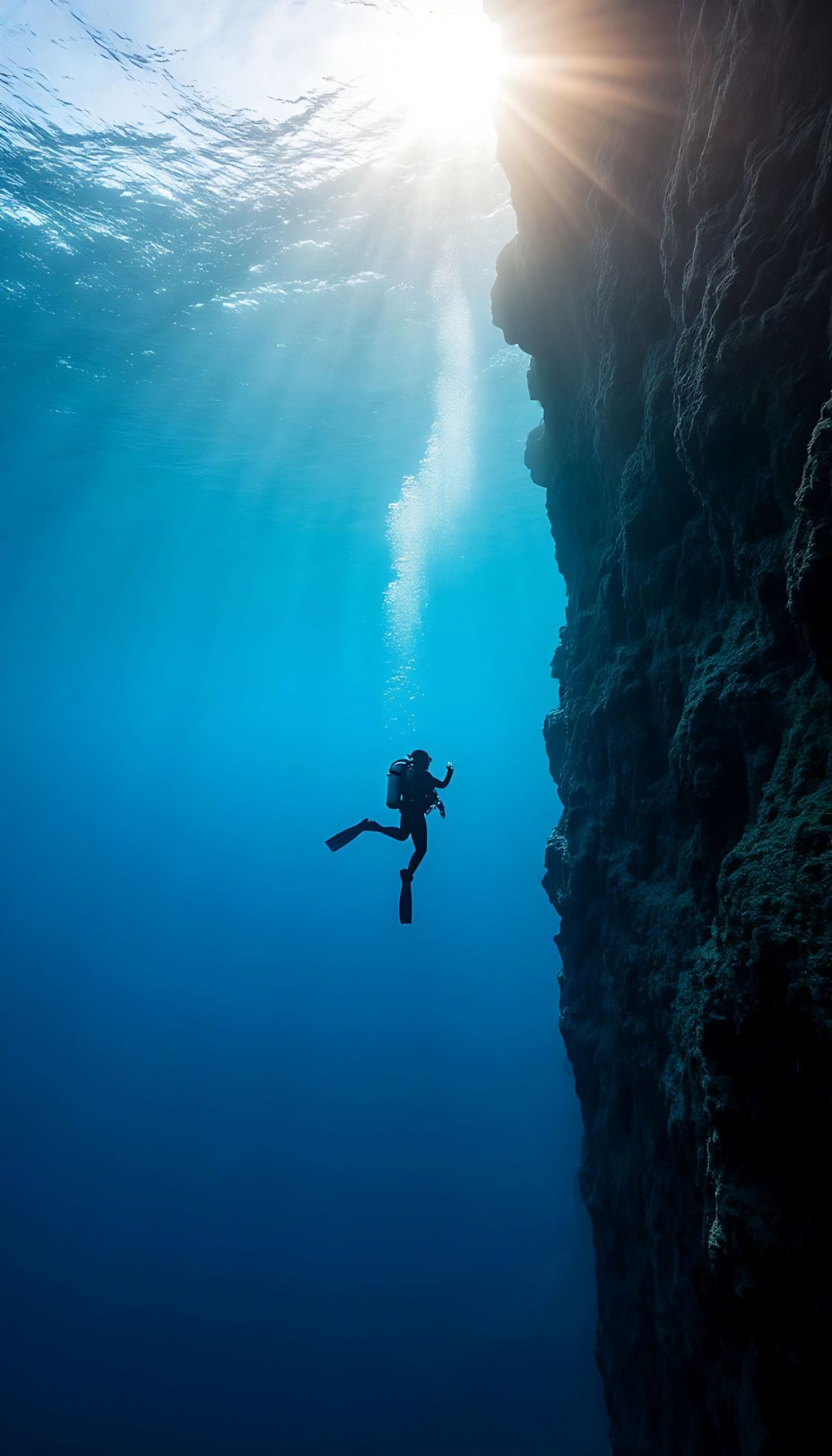
Just off Manado, at the northern tip of Sulawesi, the reef flats of five small islands end at walls that fall straight into the Celebes Sea. Bunaken was one of Indonesia's first marine national parks, and more than thirty years on it remains the classic place in the country to learn what wall diving is.
What is Bunaken National Park?
Bunaken National Park (Taman Nasional Bunaken) is a marine park in Manado Bay, North Sulawesi, protecting five islands and two stretches of mainland coast. The waters were declared a marine nature reserve in 1986 and became a national park by ministerial decree on 15 October 1991, one of the first marine parks in Indonesia. It covers about 89,000 hectares, around 97 percent of it sea.
The park lies near the centre of the Coral Triangle, and its coral is the reason it exists. Surveys cite around 390 coral species, and Indonesia put Bunaken on its UNESCO World Heritage Tentative List in 2005, though it has not been inscribed. It is managed by the national park authority, Balai Taman Nasional Bunaken, under a zoning plan last revised in 2019.
Why are Bunaken's reef walls so famous?
Because they start almost at the surface and drop vertically into deep water, so a diver or snorkeller can hang beside a living cliff in clear blue. The shallow reef flats around Bunaken Island end abruptly at the edge, and below it the walls are cut with overhangs, cracks and small caves.
Turtles are the other signature. Green turtles rest on the ledges and feed along the walls, and on many dives you see several. The best-known stretch is Lekuan on the south side of Bunaken Island, three neighbouring sites known simply as Lekuan I, II and III, where turtles and the shape of the wall make it the dive most visitors repeat. Fukui Point on the west side and Mandolin are other names you will hear, and operators run dozens of sites in all, so a week need not repeat itself.
The park's deep water holds rarer animals too. In 2009 the Indonesian coelacanth, a fish known from fossils long before it was found alive, was filmed in its natural habitat off Manado Tua. Dolphins are seen on boat crossings, and dugongs are occasionally reported over the seagrass beds.
Which islands make up Bunaken National Park?
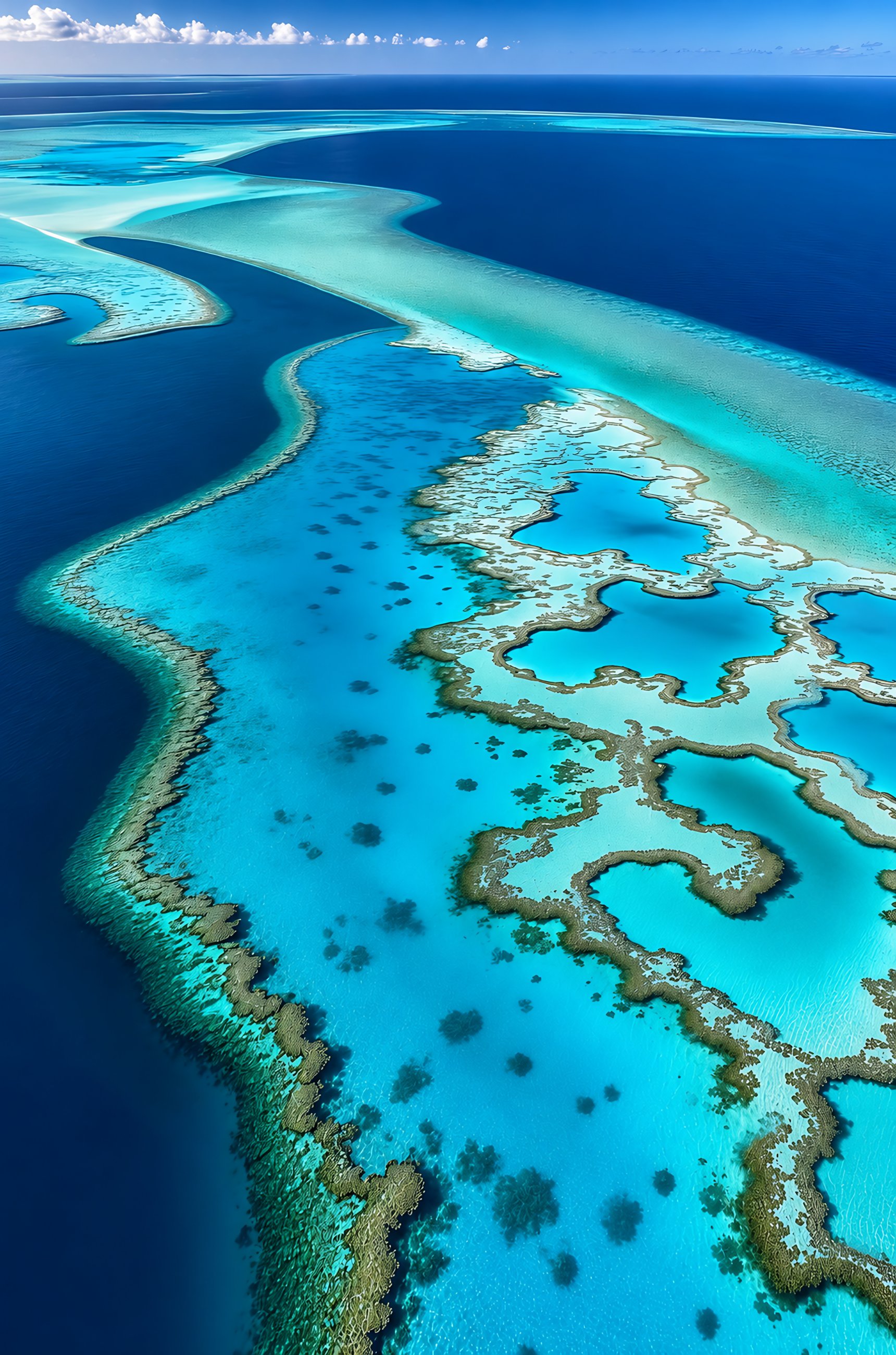
The park has five islands, Bunaken, Manado Tua, Siladen, Mantehage and Nain, plus two coastal sections on the mainland: Molas-Wori north of Manado and Arakan-Wawontulap to the south. Each island has a different shape and character.
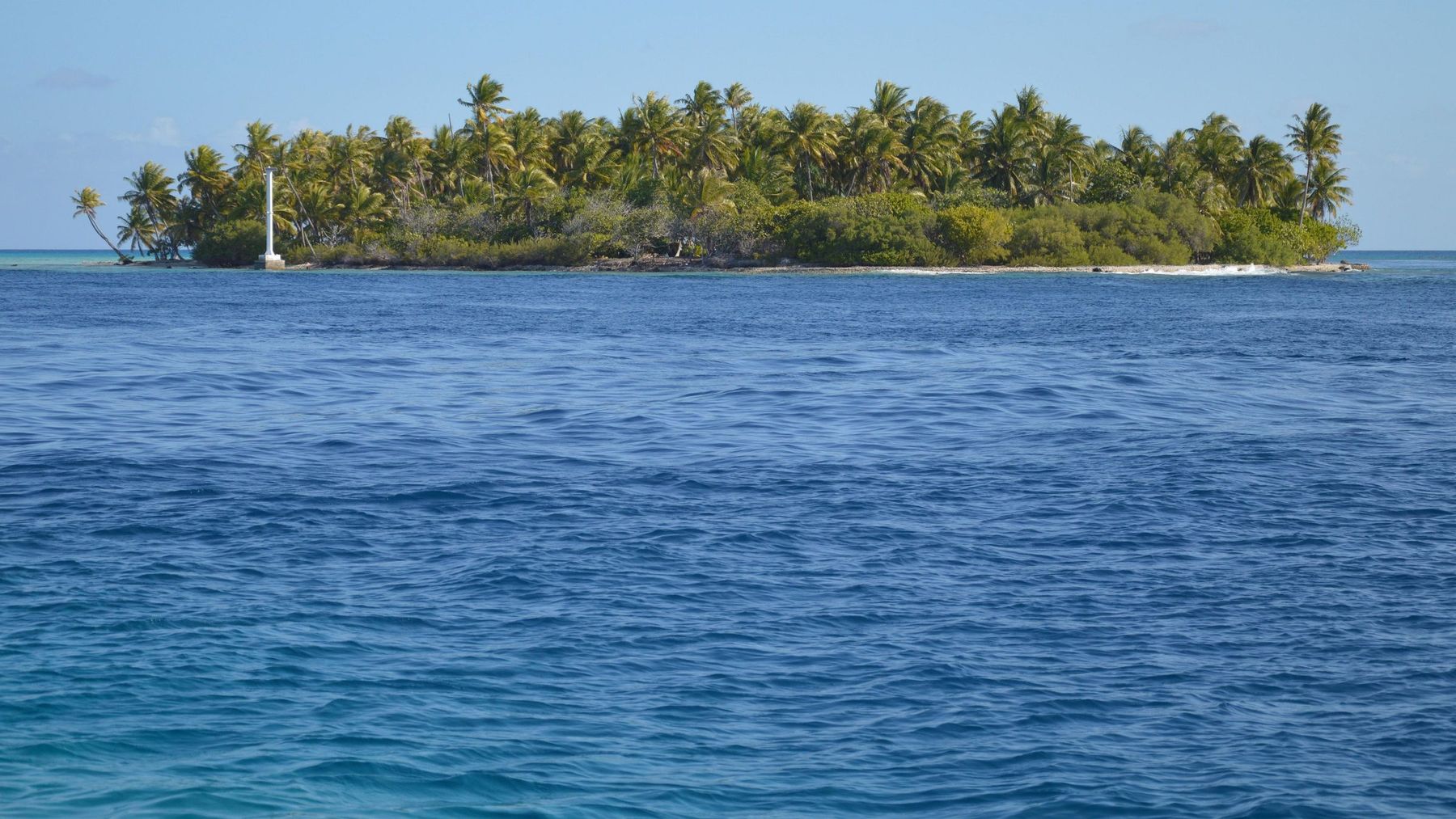
Bunaken is the busiest, a volcanic island with uplifted fossil coral, ringed by walls and home to most of the guesthouses. Manado Tua next door is the cone of an extinct volcano, rising more than 600 metres from the sea, with walls around its shores. Siladen is a low coral-sand island with resorts and easy reefs close to the beach. Mantehage, the largest and flattest, is wrapped in mangroves cut by tidal channels, and dome-shaped Nain lies furthest out to the north.
This is not an empty reserve. About 35,000 people live in 22 villages inside the park, most of them fishers or farmers. The mainland sections are mostly mangrove, seagrass and sandy slopes rather than walls, and see far fewer visitors.
Map
Bunaken, Bangka and Lembeh: the dive areas
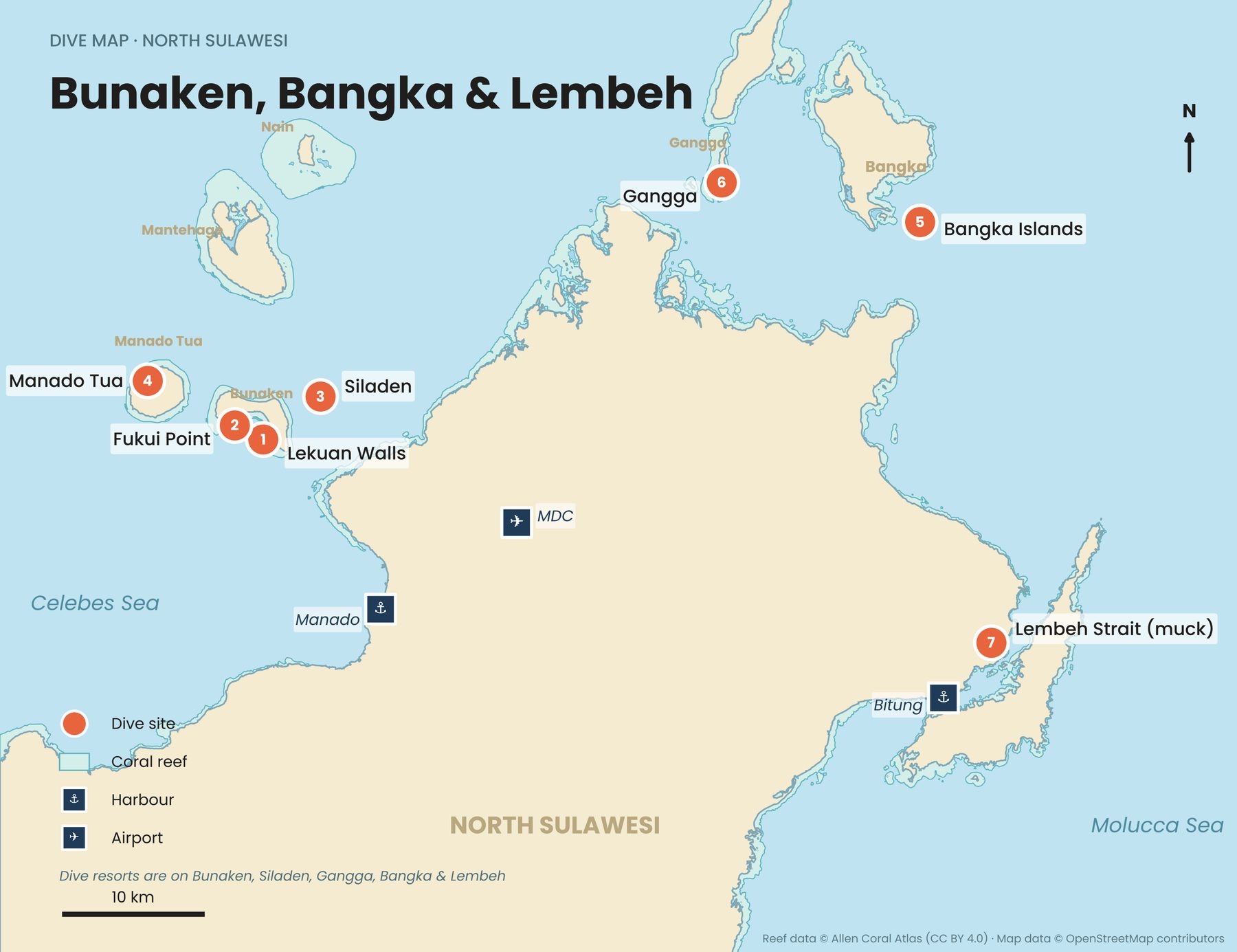
- 1Lekuan Walls
- 2Fukui Point
- 3Siladen
- 4Manado Tua
- 5Bangka Islands
- 6Gangga
- 7Lembeh Strait (muck)
What is diving and snorkelling at Bunaken like?
Most diving at Bunaken is gentle drift diving along walls in warm, clear water, which suits new divers as well as experienced ones. Currents are usually mild to moderate, though some sites run harder, and Open Water certification is the sensible minimum. Water sits between about 26 and 29 °C, and a 3 mm suit is enough.
The classic plan is to start deep on the wall and work slowly upwards, finishing with a long safety stop on the reef top. On Lekuan, Fukui and around Manado Tua expect turtles, sea fans, sponges and schools of fish off the edge. Siladen's reefs, just off the beach, are a good first dive. Many trips combine Bunaken with the soft-coral pinnacles of the Bangka Islands to the north and the muck diving of the Lembeh Strait near Bitung, both outside the park but within a few hours of Manado.
Snorkelling is some of the easiest in Indonesia because the wall begins in a metre or two of water. Swim out at mid to high tide and float over the lip of the drop-off. At low tide the flats can be too shallow to cross without touching coral, so time your swim with your guesthouse or boat crew.
When is the best time to visit Bunaken?
You can dive Bunaken all year, but the drier months, roughly May to October, usually bring the calmest seas and the best visibility. The wetter season runs from about November to March or mid-April, with December to February the roughest, when storms can last for days and the boat crossing from Manado is choppy.
Rain matters more here than in remote parks because Manado's rivers drain into the bay, and after heavy rain the water near the mainland clouds over and rubbish washes out to the islands. July to October is peak season at the resorts, and August, Easter and Christmas fill up early, so book ahead. April to June is often settled and quieter.
How do you get to Bunaken Island?
Fly to Manado's Sam Ratulangi International Airport (MDC), usually via Jakarta, Bali or Makassar, then take a boat across the bay. The airport is about 30 minutes by road from Manado's harbour, and the crossing to Bunaken Island takes around 45 minutes, sometimes up to an hour.
Most visitors simply let their resort arrange the whole transfer, which is the easiest option. Public wooden boats leave from Kalimas harbour, behind the Celebes Hotel in central Manado, usually once a day in the early afternoon and not on Sundays, and return to the city the next morning. They are slow, often crowded and often late; a Wikivoyage update from June 2024 lists a tourist fare of Rp 50,000. Chartered speedboats are faster and cost more. Schedules change, so confirm them the day before.
Should you stay on Bunaken, Siladen or in Manado?
Stay on Bunaken or Siladen if diving is the point of the trip, and in Manado if you want a day or two in the park as part of a wider journey. Island stays mean short boat rides and early dives before the day-trip boats arrive.
Bunaken Island has the widest range, from simple homestays to full dive resorts, grouped mainly along Liang beach on the west side and Pangalisang beach on the east. It has the walls on its doorstep and a lived-in village feel. Siladen is smaller and quieter, with a handful of resorts on white sand and a house reef off the beach, and Lekuan is a short boat ride away. Mainland resorts on the Manado coast are closer to the airport, restaurants and shops, and to sites in Manado Bay, but every park dive starts with a longer crossing. Bring cash for the islands, where card machines and ATMs are scarce.
How much is the Bunaken National Park entrance fee?
As published by the park authority and reported in August 2025, foreign visitors pay Rp 150,000 per person per day to enter Bunaken National Park, and Indonesian citizens pay Rp 5,000. The fee covers divers and snorkellers alike, and tickets are sold at the park booth on Bunaken Island. Check the current rate before you go.
In practice most resorts and dive centres buy the ticket for you or add it to your bill, so ask whether it is included in your package. Carry your ticket or receipt, because park patrols carry out spot checks on the water. Fee money supports patrols, rubbish collection and village programmes in the park.
Is it safe to dive and snorkel at Bunaken?
Yes, for divers and snorkellers who follow their guides and know their limits. The main risks are depth, current and boat traffic rather than wildlife. On a wall there is no bottom to stop you, so agree a maximum depth before the dive and watch your computer.
Use an established operator with oxygen and a radio on board, and make sure your insurance covers diving. Manado has had a small recompression chamber at a hospital in Malalayang, but confirm with your operator that it is working and how evacuation would be handled. Snorkellers should wear a rash vest, stay visible to boats near the drop-off and wear booties if wading on the flats, where sea urchins hide among seagrass and rubble. After several days of repeated diving, leave at least 18 hours before your flight out of Manado.
How to visit Bunaken responsibly
Bunaken's biggest visible problem is plastic. Rubbish from Manado's rivers, among them the Sario, Tondano and Malalayang, washes into the bay, and in the rainy season it drifts onto the islands' beaches and over the reefs; in January 2021 park staff and volunteers removed more than 2.8 tonnes, mostly plastic bottles, from Liang beach alone. Since 2024 the No-Trash Triangle Initiative has been installing river barriers in Manado to catch plastic before it reaches the park.
You can help. Refill a water bottle instead of buying plastic ones, take your rubbish back to the mainland, and join a beach or reef clean-up if your resort runs one. Underwater, keep good buoyancy, never touch, stand on or kick the coral, give turtles space and never ride or chase them, and do not buy shells or coral. Pay the park fee, use local guides and boatmen and dress modestly in the villages.
