Off the southeastern tip of Sulawesi, where the Banda Sea meets the Flores Sea, four small islands hold one of Indonesia's largest marine parks. Wakatobi is far from the usual routes, and that is exactly why its walls and reef flats are still among the healthiest in the country.
What is Wakatobi National Park?
Wakatobi National Park (Taman Nasional Wakatobi) is a marine park covering the Tukangbesi islands off the southeastern tip of Sulawesi. Its name is a puzzle: the first two letters of the four main islands, Wangi-Wangi, Kaledupa, Tomia and Binongko. The waters were declared a marine conservation area in 1996, a 2002 decree formally made them a national park, and in 2012 UNESCO named Wakatobi a Biosphere Reserve.
The park covers about 1.39 million hectares, nearly 14,000 km², which makes it larger than Bali, and almost all of it is sea. It overlaps almost exactly with Wakatobi Regency, home to around 118,000 people, so this is not an empty wilderness. Fishing villages, Bajau stilt settlements and hilltop forts sit right beside the reefs, and two sets of rules apply: the park's own zoning, and customary village law (adat) that closes some reefs and octopus grounds by season.
Why are Wakatobi's reefs so special?
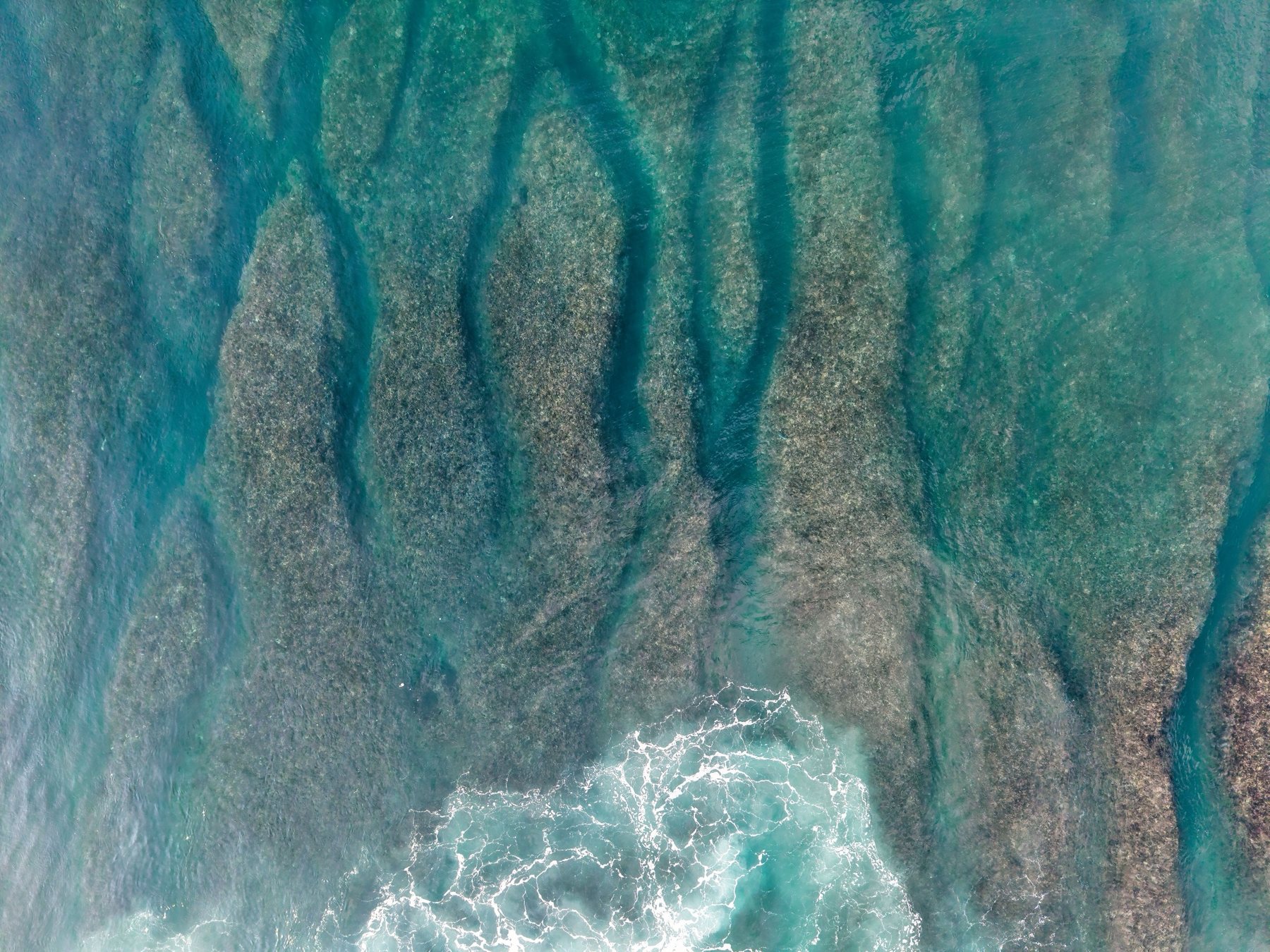
Wakatobi sits near the heart of the Coral Triangle, the ocean region that holds about three quarters of the world's reef-building coral species. Here the reefs take every form at once: fringing reefs around the islands, barrier reefs, and true atolls. Kaledupa Atoll, about 49 km long, is often called the longest single atoll in the Asia-Pacific. Off the edges, walls drop hundreds of metres into the Banda Sea, which is why so much diving here is wall diving.
Three things keep the water clear and the coral healthy. The islands are limestone with almost no rivers, so there is little run-off and visibility is often around 30 metres or more. The surrounding ocean is deep, clean and far from industry. And many communities protect their reefs: since the late 1990s a dive resort on Tomia has paid villages to keep about 20 km of reef unfished, and a small no-take zone off Hoga, set up with Bajau fishers in 2001, saw grouper numbers rise while they fell outside. Tourism material quotes 942 fish species for the park; on one healthy wall you can easily count more than a hundred.
It is not a pristine aquarium. Fish bombing and coral mining damaged reefs in the past and overfishing remains a pressure, but recent surveys by divers and scientists have found the main reefs in good health.
Which Wakatobi island should you visit?
Each of the four islands has its own character, and most visitors choose one or two rather than all four. Public boats link them, but the crossings take hours, so plan time on each.
Wangi-Wangi is the gateway and the busiest island, with the airport, the harbours, the banks and Wanci, the regency capital. Just outside town is Mola, one of the largest Bajau villages, and to the south the hilltop village of Liya Togo keeps its old fortress walls, its mosque and its weavers. On the west coast, Sombu has a wall for divers and a beach for snorkellers.
Kaledupa, two to three hours by boat from Wanci, is the green, quiet middle island ringed by mangroves. Offshore stands Sampela, a Bajau village built on stilts over the reef flat, and tiny Hoga, a research base and the simplest place to dive on a modest budget. Tomia, about three hours from Wanci, is where Wakatobi's diving reputation was built, with more than 40 mapped sites. Binongko, the remote southern island, is known for its blacksmiths and rarely sees visitors.
Map
Wakatobi: the islands
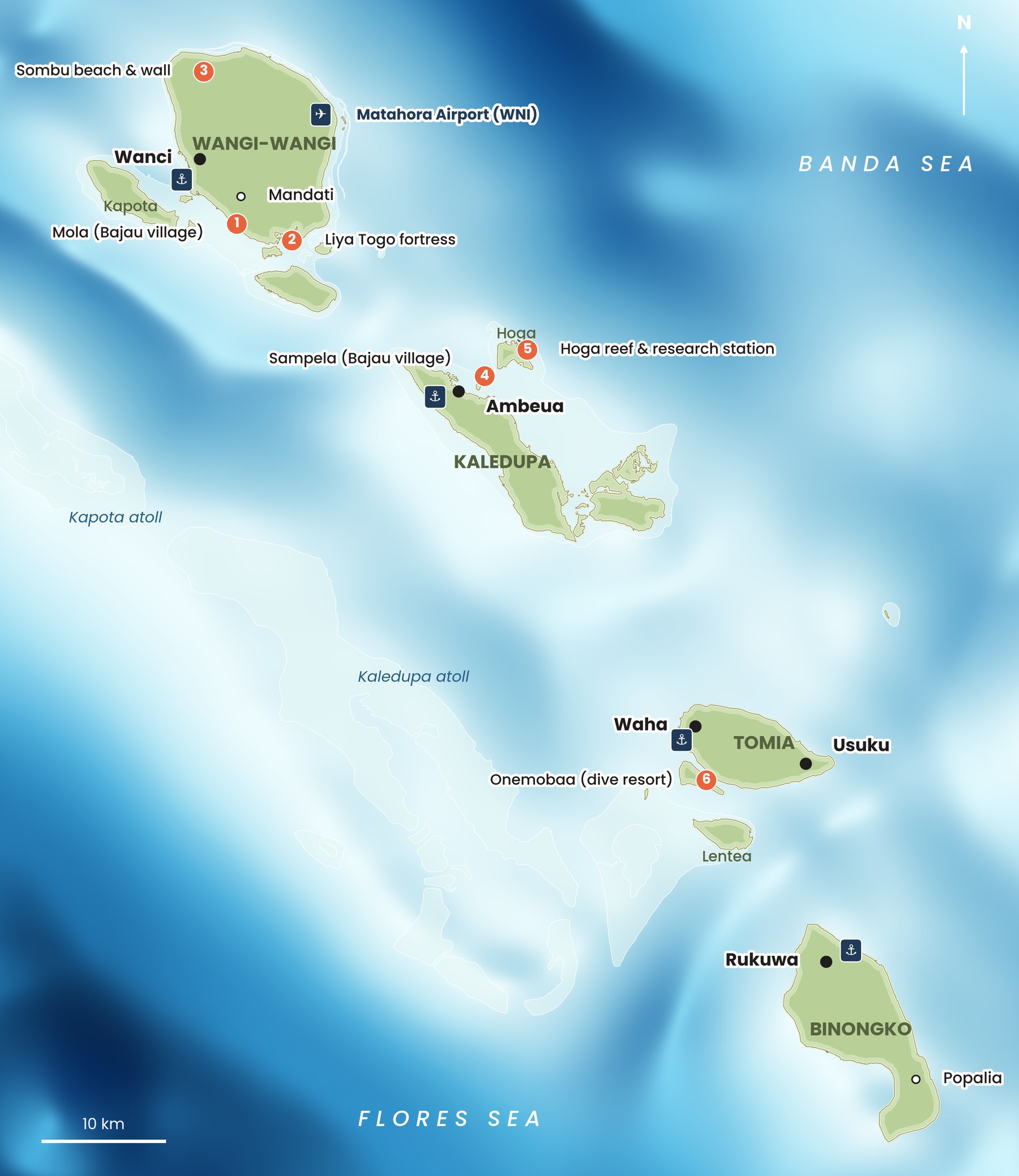
- 1Mola, Bajau village
- 2Liya Togo fortress
- 3Sombu beach and wall
- 4Sampela, Bajau village
- 5Hoga reef and research station
- 6Onemobaa, dive resort
What is diving and snorkelling in Wakatobi like?
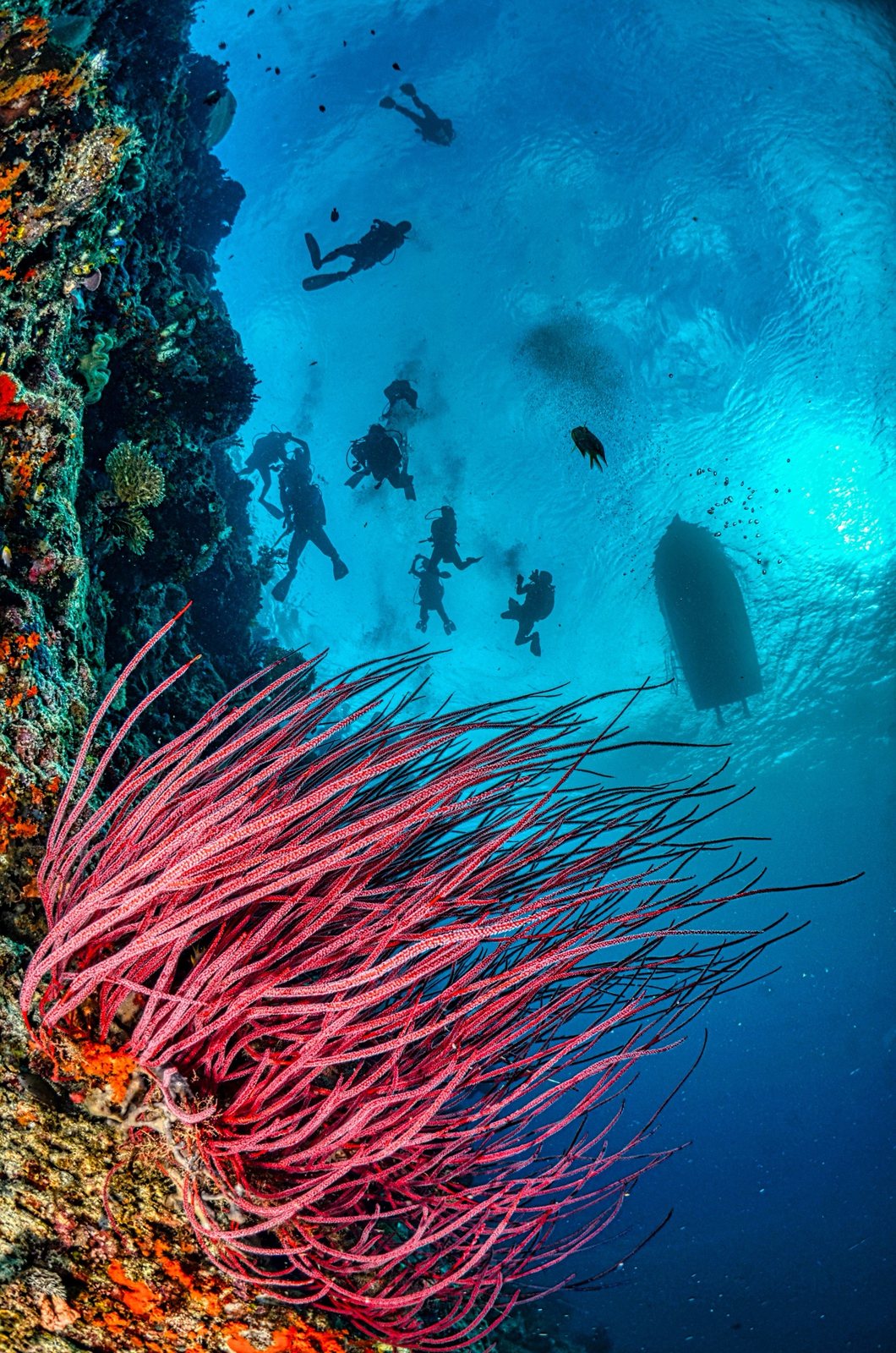
Most diving here is gentle wall and reef diving in clear water, which suits a wide range of levels, from new divers to photographers spending a week on one wall. Currents run through the channels and around exposed points, so some sites need experience, but operators choose sites by conditions. Water temperature runs from about 25 to 27 °C from June to October and 28 to 30 °C from November to March.
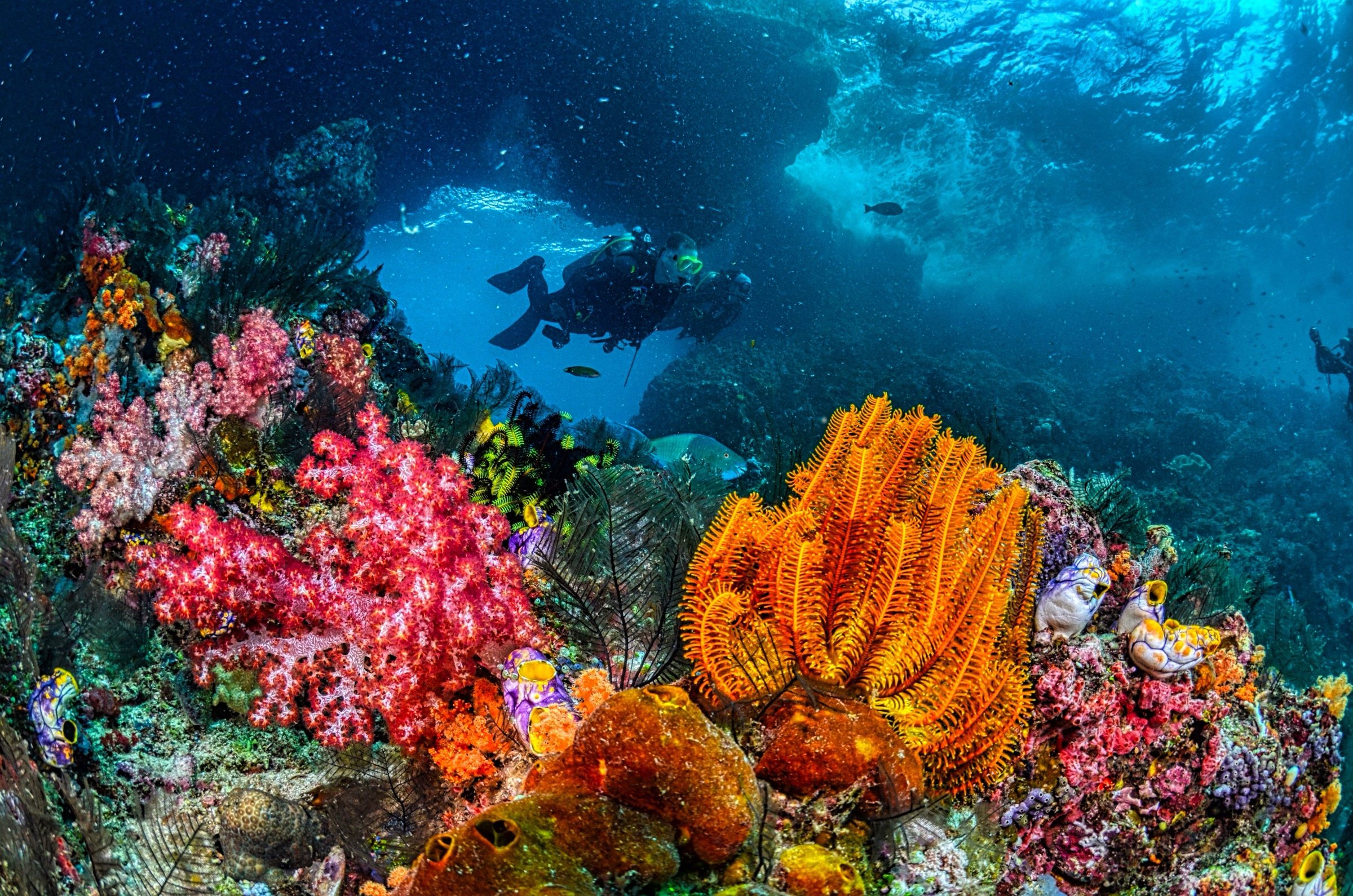
The classic names are Sombu Wall on Wangi-Wangi, Hoga Channel off Kaledupa, the walls of Roma and Mari Mabok near Tomia, and the north wall of Kaledupa Atoll. Expect sea fans and whip corals on the walls, plenty of small life in the shallows, and common turtles; reef sharks and eagle rays appear too, but mantas and whale sharks are not what Wakatobi is about. Wakatobi Dive Resort, opened on the islet of Onemobaa off Tomia in 1995, is the best-known way to dive the park; liveaboards cover several islands in a week, and homestays on Hoga, Kaledupa and Tomia work with small local dive operators.
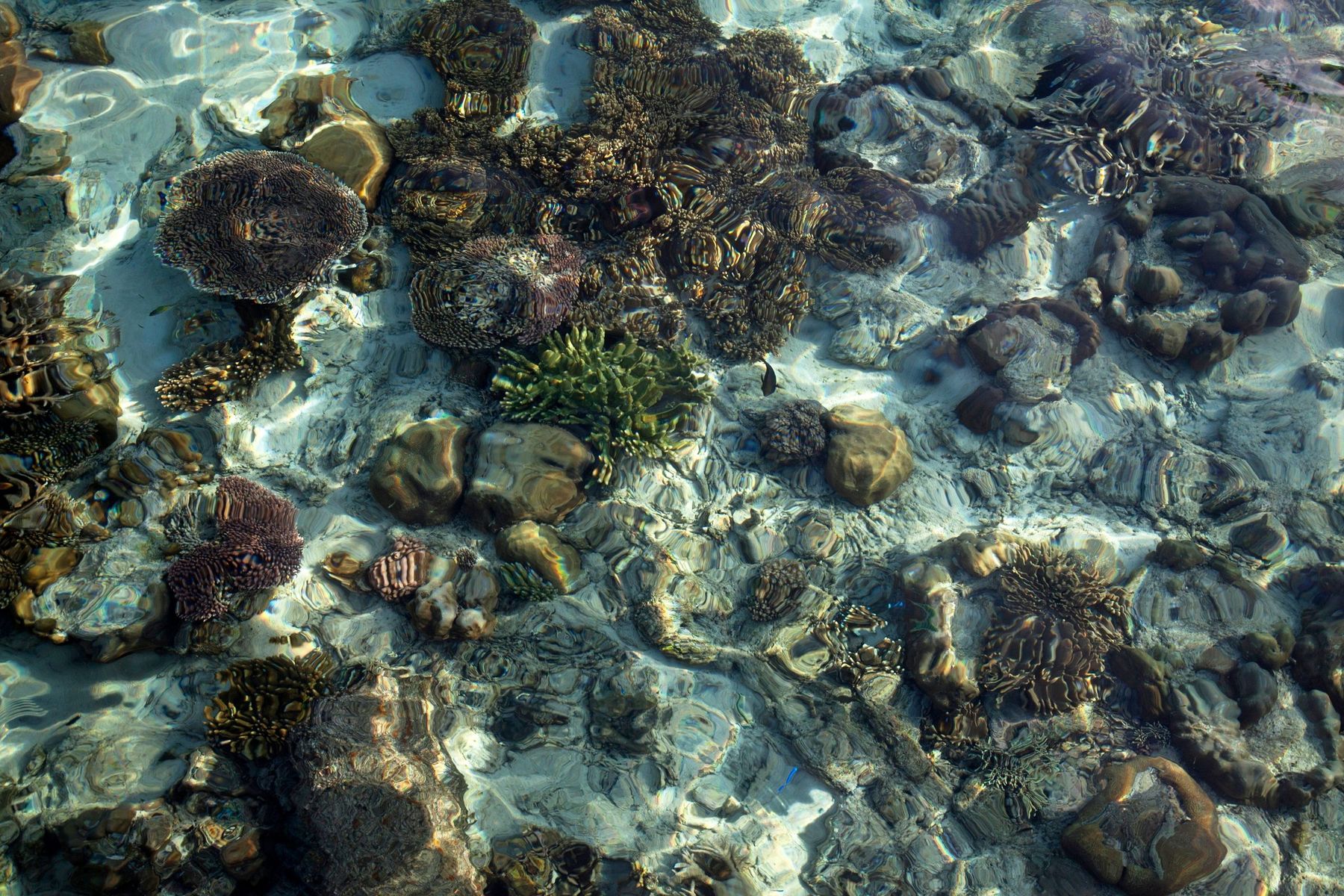
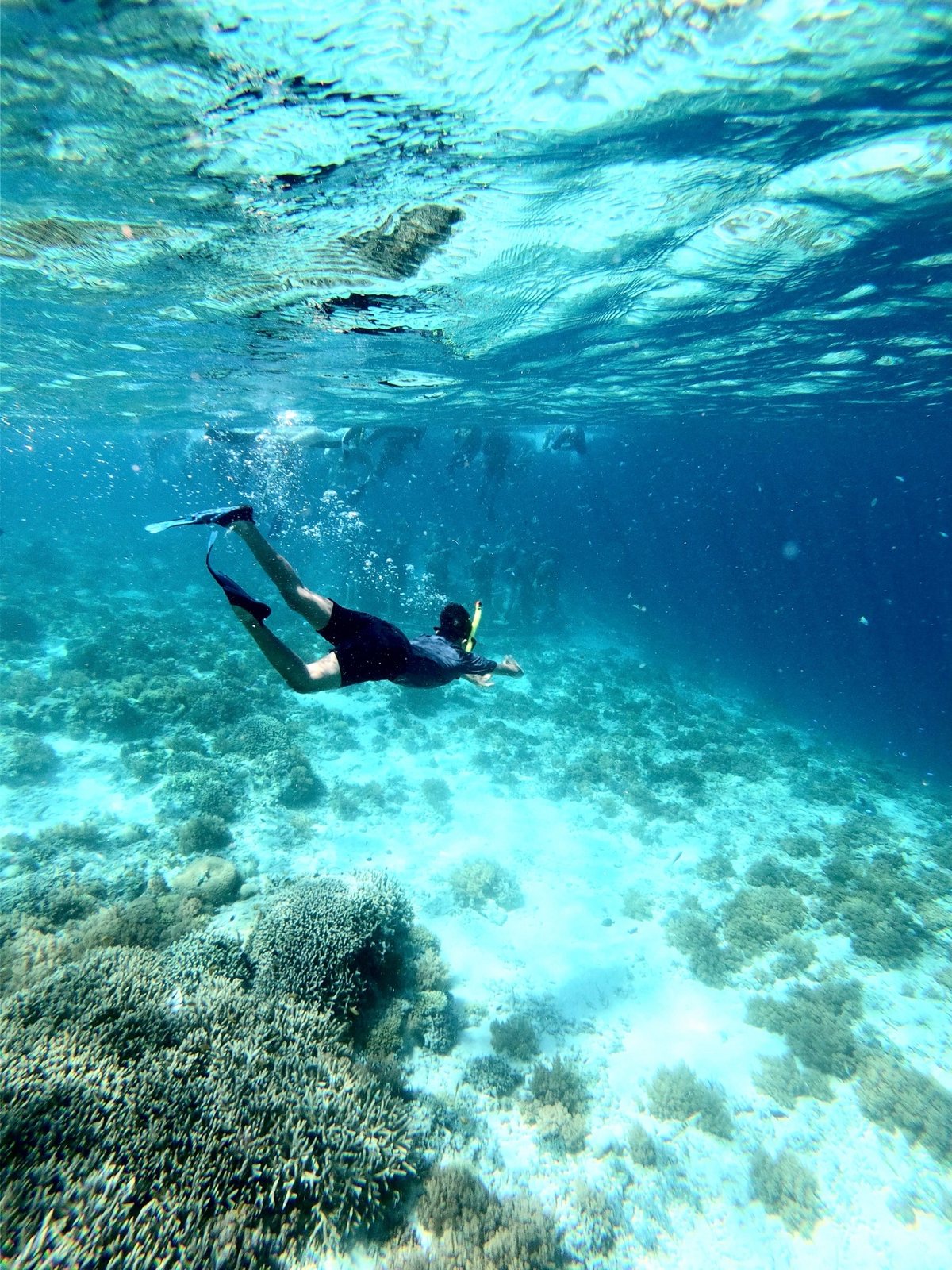
Snorkellers do well here because the reef flats come right up to the surface. Hoga's reef flat, Sombu beach and the house reefs at the resorts are the easy starting points. Walk in only where the reef allows, and wear fins and a rash vest rather than standing on coral.
Who are the Bajau of Wakatobi?
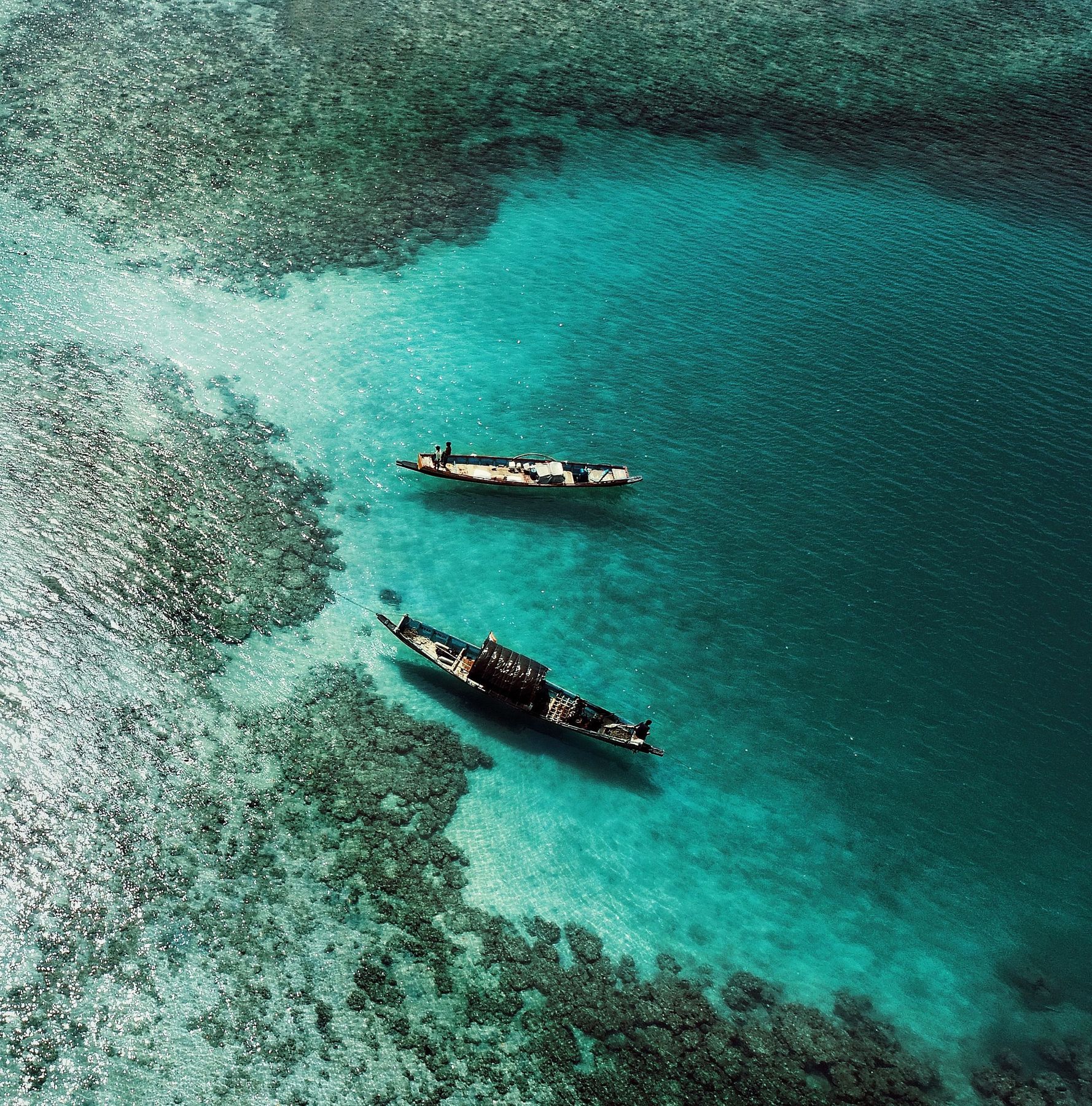
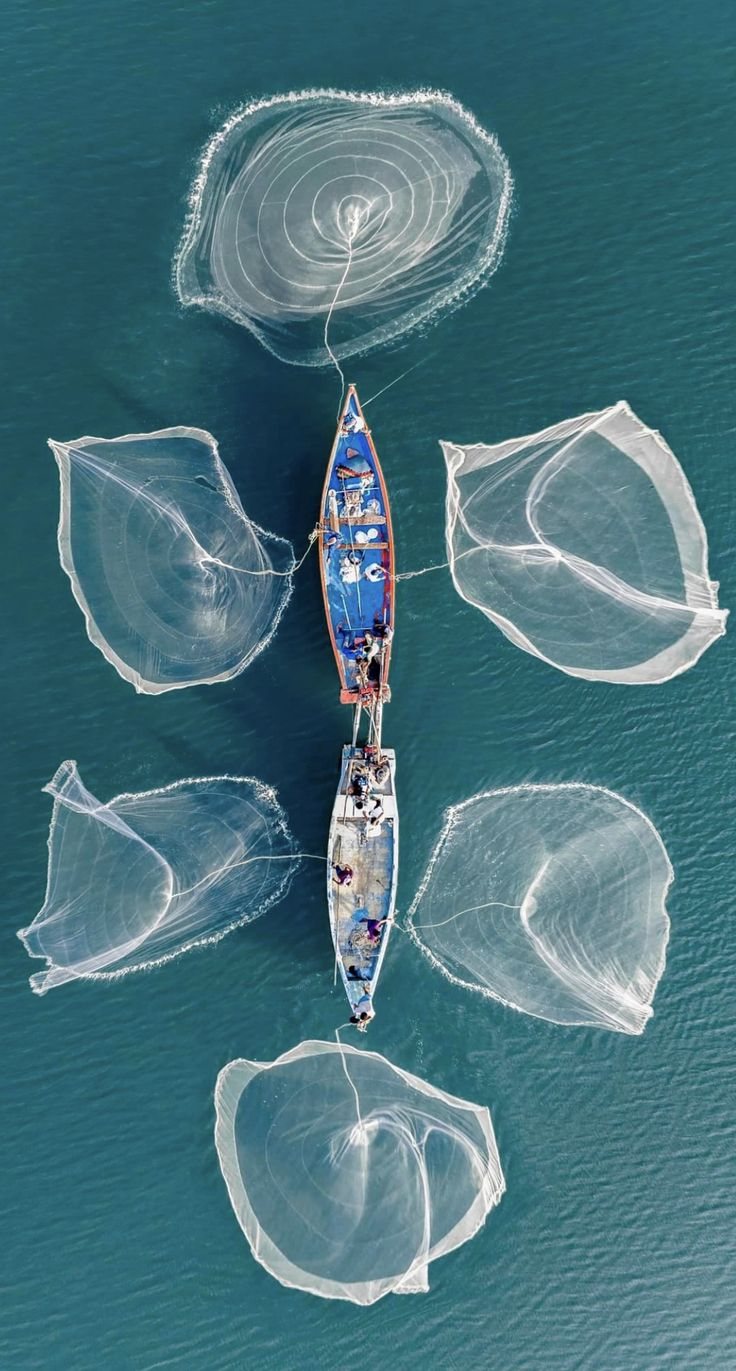
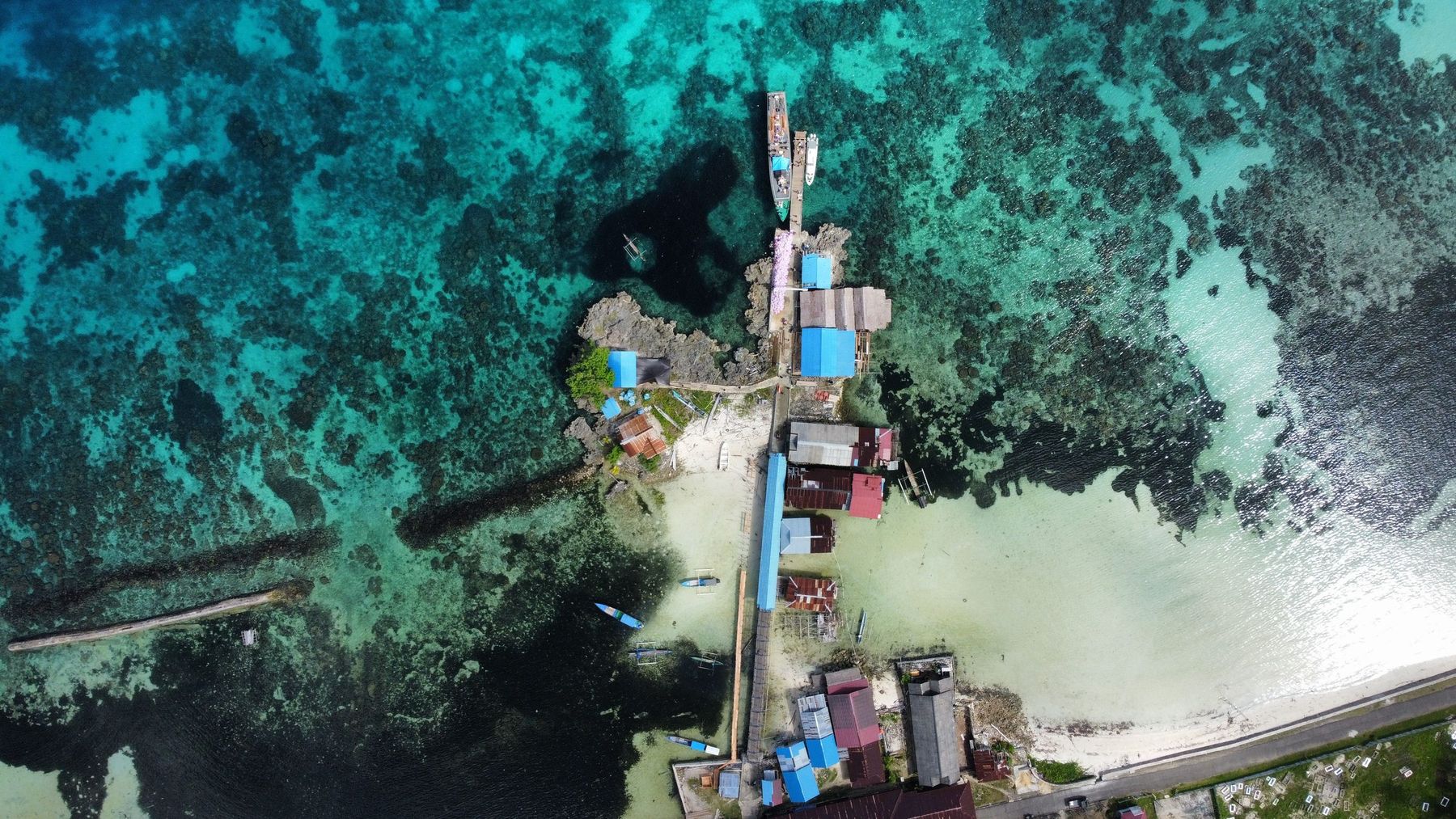
The Bajau, or Bajo, are the sea people of eastern Indonesia. They call themselves Sama, and in Wakatobi they live in stilt villages over the water, the best known being Mola on Wangi-Wangi and Sampela off Kaledupa. Generations of Bajau have fished these reefs from small wooden boats, and their villages are among the most remarkable sights in the park.
Visit with a local guide or your homestay host, ask before taking photographs, and buy from local warungs and boatmen. Wakatobi is a largely Muslim region, so cover shoulders and knees in villages, and take care around mosques and Friday midday prayers.
When is the best time to visit Wakatobi?
You can dive Wakatobi all year, but the calmest seas usually come in the transition months, around April to May and October to November, when the wind drops and the sea often turns glassy. From roughly June to September the east monsoon brings steady southeasterly winds, cooler water as low as about 25 °C, more plankton and rougher crossings. From roughly December to March the west monsoon brings squalls and the heaviest rain.
Because the islands have almost no rivers, rain rarely clouds the water. What the seasons change is the surface: chop on exposed sites and swell on the boat crossings between islands. If you are prone to seasickness or plan to hop between islands, aim for the transition months.
How do you get to Wakatobi?
The gateway is Matahora Airport (WNI) on Wangi-Wangi. Scheduled flights connect it with Kendari on mainland Southeast Sulawesi, and in July 2026 TransNusa launched a route from Bali; schedules on both have changed often, so check them before you book. Wakatobi Dive Resort runs its own charter for guests from Bali to an airstrip on Tomia.
By sea, fast boats run from Kendari to Wanci a few times a week, a long day of around 13 hours, and slow overnight boats leave most nights from Bau-Bau on Buton. Between the islands, public boats run from Wanci to Kaledupa in two to three hours, to Tomia in about three, and to Binongko in five to seven, and an ASDP car ferry has linked the four islands a few times a week since 2022. Times depend on the weather, so ask your host the evening before.
What does it cost to visit Wakatobi National Park?
The park's own ticket office lists an entrance fee of IDR 150,000 per foreign visitor per day (IDR 225,000 on public holidays), plus IDR 25,000 a day for diving or IDR 15,000 for snorkelling. Collection has long been patchy and operators usually handle it, so ask yours what applies and keep any receipt.
ATMs are found only in Wanci, so bring enough cash for your whole stay on the other islands, with a reserve in small notes. Costs range widely: homestays and local dive centres on Hoga, Kaledupa and Tomia suit a modest budget, while the resort and the liveaboards sit firmly at the top of the market.
How to visit Wakatobi responsibly
Wakatobi's reefs have survived because local people chose to protect them. Pay the park fee, use local guides and boatmen, and follow village rules about closed reefs. Underwater, keep good buoyancy, never touch or stand on coral, and do not feed fish or chase turtles. Take your rubbish back to shore, never throw plastic overboard, and choose reef-safe sunscreen or cover up with a rash vest.